

What kinds of malfunctions can occur with PVC rapid doors?
1. Door Fails to Start/No Response
• Power issues: Check power supply (e.g., power outage, voltage fluctuation, blown fuse).
• Control signal failure: Dead remote battery, damaged receiver, or unpaired remote.
• Emergency stop activated: Emergency button pressed accidentally or not reset.
• Motor protection: Overheat protection triggered or motor failure.
• Limit switch fault: Misaligned or damaged travel switch.
2. Door Stops Mid-Operation
• Obstruction triggers safety protection: Photoelectric sensor or bottom airbag detects an obstacle.
• Track blockage: Curtain derailed, track deformed, or foreign object obstruction.
• Voltage fluctuation: Unstable power supply causes system reboot.
• Motor overheating: Frequent starts/stops or excessive load triggers protection.
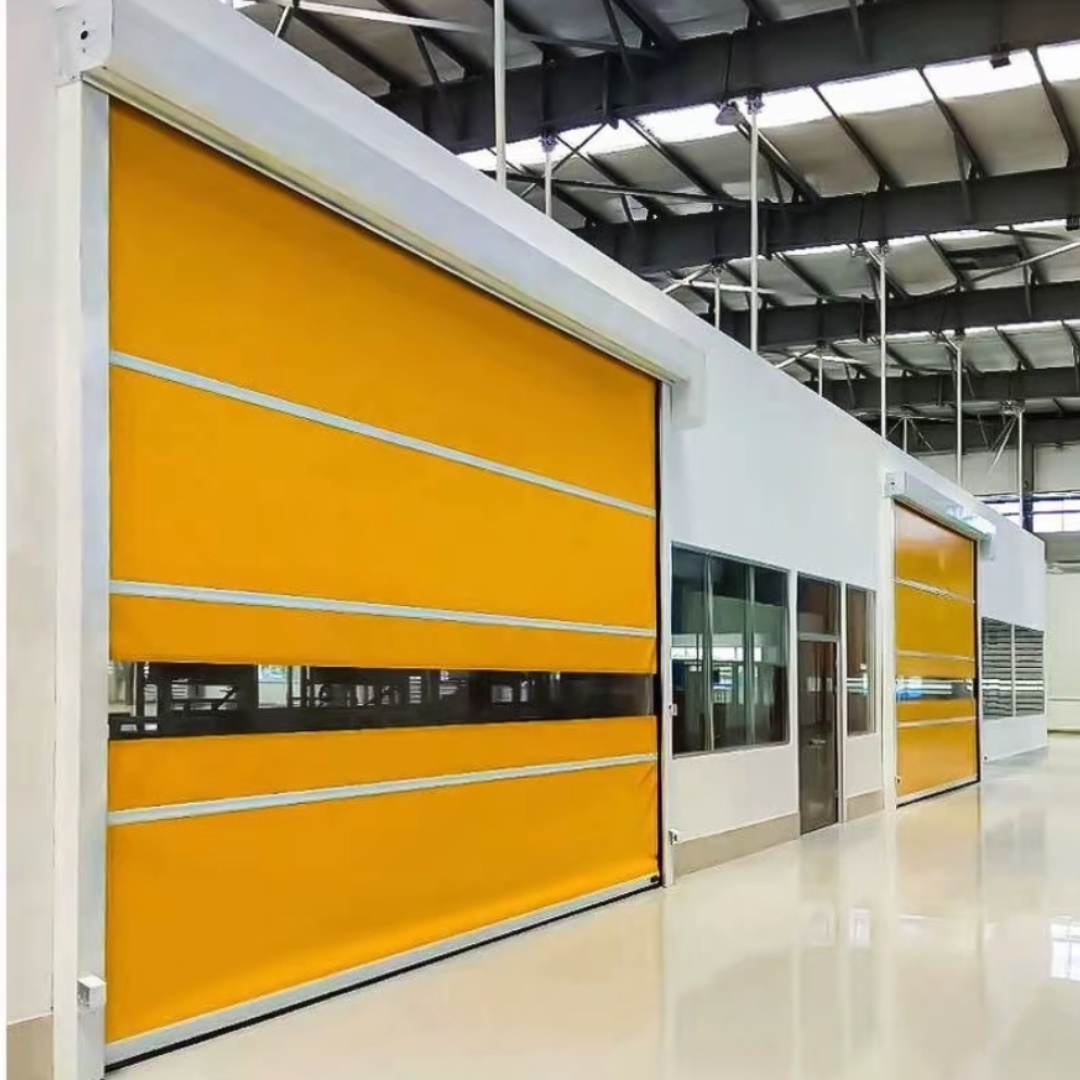
3. Slow Door Curtain Movement
• Motor or gearbox issue: Motor aging, insufficient lubrication, or gearbox damage.
• Spring balance failure: Broken or weakened torsion spring increases motor load.
• High track resistance: Dust buildup, deformation, or inadequate lubrication.
4. Curtain Misalignment or Derailment
• Uneven track installation: Track (tilted) or loose screws.
• Curtain deformation: PVC curtain stretched, torn, or warped.
• Roller damage: Worn, detached, or seized guide wheels/bearings.
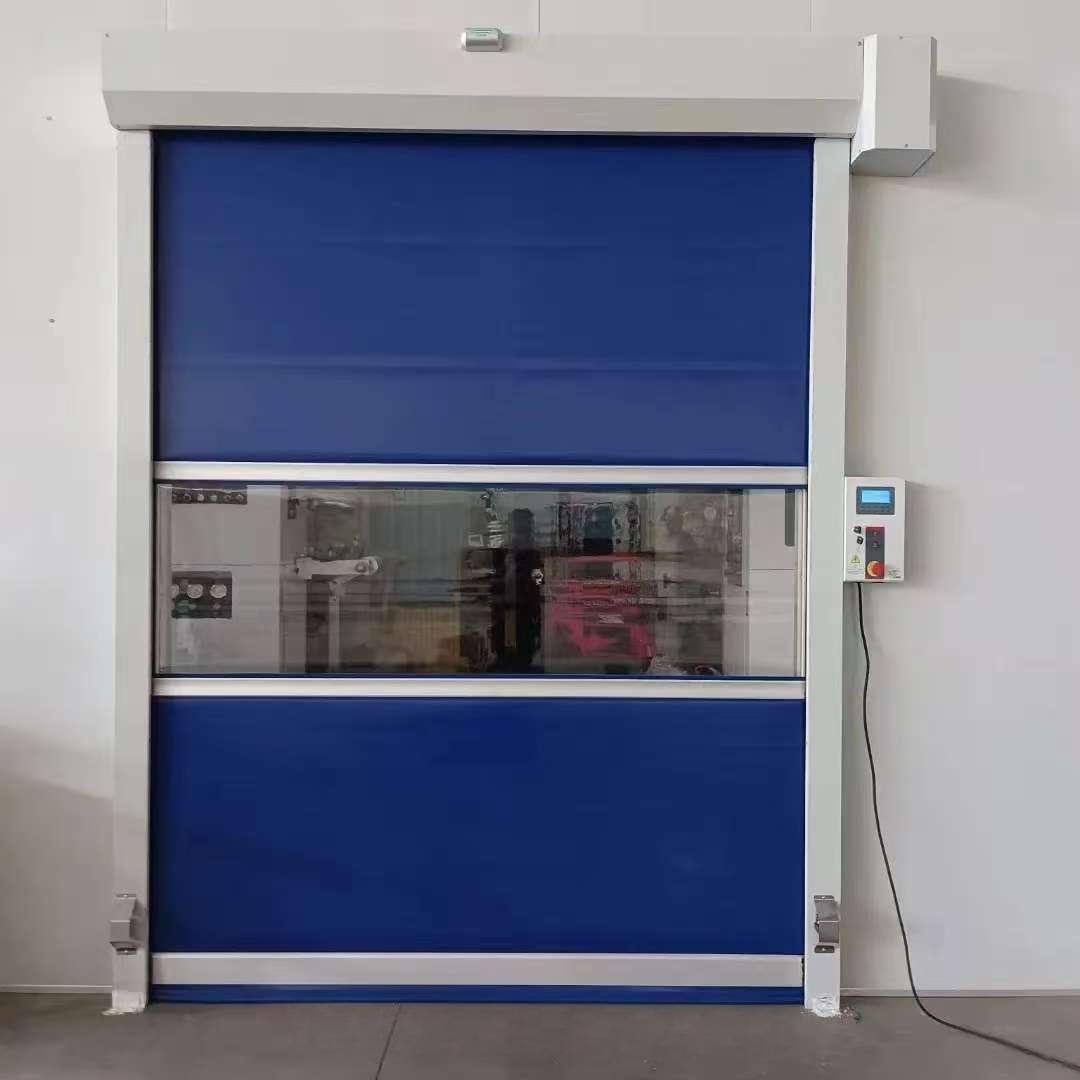
5. False Safety Device Activation
• Photoelectric sensor fault: Dirty lenses, misaligned beams, or wiring short circuit.
• Bottom airbag sensitivity: Low air pressure or sensor damage.
• EMI interference: Strong electromagnetic devices disrupt control signals.
6. Abnormal Noise
• Worn mechanical parts: Lack of lubrication or damage to rollers, chains, or bearings.
• Loose structure: Loose track screws or motor brackets.
• Spring noise: Torsion spring fatigue or poor lubrication.
7. Curtain Fails to Fully Close/Open
• Limit switch misalignment: Uncalibrated or loose travel switch.
• Control system failure: Incorrect PLC/frequency inverter parameters.
• Manual-auto mode conflict: Incorrect control mode selection.
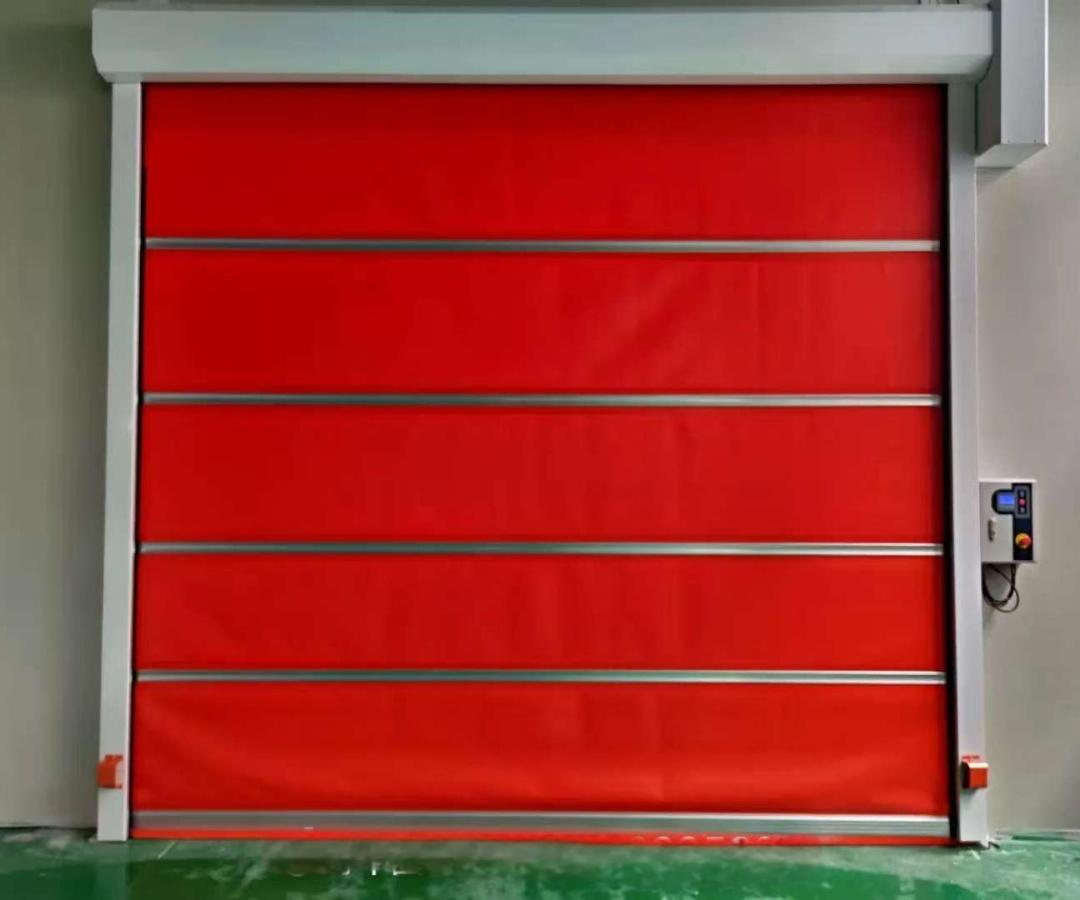
8. Poor Sealing (Air/Light Leaks)
• Curtain aging: PVC curtain cracked or lost elasticity.
• Side brush wear: Sealing brush (detached) or deformed.
• Bottom seal damage: Worn or improperly installed rubber strip.
Maintenance Recommendations
1. Regular inspections: Clean tracks, lubricate rollers/chains, test safety devices.
2. Replace wear parts promptly: E.g., sealing brushes, torsion springs, photoelectric sensors.
3. Professional repairs: For motor, control system, or structural issues, contact the manufacturer or technicians.
4. Systematic troubleshooting required if malfunctions persist—may indicate improper installation or product defects.
This version ensures technical accuracy while maintaining clarity for English-speaking users. Let me know if you'd like any refinements!
Q: What are the most common operational failures in PVC rapid doors?
A: Frequent issues include:
Misaligned curtain tracking
Sensor detection failures
Motor overheating
Control system errors
Curtain tearing or derailment
Q: Why might the door stop mid-operation suddenly?
A: Typical causes:
Obstruction detected by safety sensors
Power supply interruption
Motor overload protection activation
Control board malfunction
Q: What causes the PVC curtain to come off its tracks?
A: Primary reasons:
Guide wheel wear or damage
Excessive wind pressure
Impact from vehicles/equipment
Improper tension adjustment
Q: How to troubleshoot sensor malfunction issues?
A: Basic steps:
Clean photoelectric sensor lenses
Check alignment of emitter/receiver
Verify wiring connections
Test with calibration tool
Q: What maintenance prevents motor failures?
A: Critical measures:
Regular lubrication (per manufacturer schedule)
Cleaning cooling vents
Voltage stability checks
Belt tension inspections
Q: When should professional service be called?
A: Immediately if:
Electrical components smoke/spark
Structural damage occurs
Multiple error codes display
Safety systems fail repeatedly
Recommended Products
up to dateNiue Automatic Door Accessories
- Durable PVC Fast Rolling Door Fittings for Enhanced Security
- Automatic Repair of Zipper Door Plastic/Polymer Rails
- Smart Automatic Door Sensor for Fast Rolling Access Control
- Soft Fast Gate Control System 1.5kw Servo Motor and Control Box
- Automatic Access Control Square Surface Mount Infrared Non-Contact Switch
- Explosion-Proof Reinforced Self-Limiting Electric Heating Belt
- Explosion-Proof Shielded Self-Controlling Temperature Electric Heating Belt
- Heating Belt for Anti-Freezing, Heating and Heat Preservation of Cold Storage Doors
- 40W flame retardant explosion-proof self-limiting electric heating belt
- High Speed Door Zippers Industrial Door Zippers
- Safety Beam Sensor Use for Automatic Door
- Wireless Hand Sensor Switch For Automatic Door
- Hospital Door Foot Sensor
- Automatic Sliding Door System Wireless Touch Press Switch
- Automatic Sliding Door IP65 Waterprooft Wireless Hand Press Switch
- Automatic Door Microwave Sensor
- Reflective Type Infrared Detector
- Automatic High Speed Door Infrared Radar Sensor CNB-204G
- Aluminum Alloy Wind Section For PVC rapid roller shutter door
- Aluminum Bottom Section For PVC high speed rolling shutter door