

Technical Architecture of Zipper Doors: Components and Standards
1. Core Functional Components
Curtain:
Material: Typically made of PVC-coated polyester or heavy-duty industrial fabric (0.8–1.5 mm thick), with optional fire-resistant, antimicrobial, or UV-resistant properties.
Design: Features a zipper-like interlocking track system for rapid sealing. Insulated variants may include aluminum foil layers (7–8 mm thick) for thermal efficiency.
Interlocking Teeth:
Constructed from metal (aluminum, copper) or high-strength polymer, designed for durability and secure closure.
Slider Mechanism:
Facilitates smooth opening/closing via a pull tab or automated drive system. Safety features include anti-release stops to prevent accidental disengagement.
Top/Bottom Stops:
Prevent over-travel of the slider and ensure curtain alignment during operation.
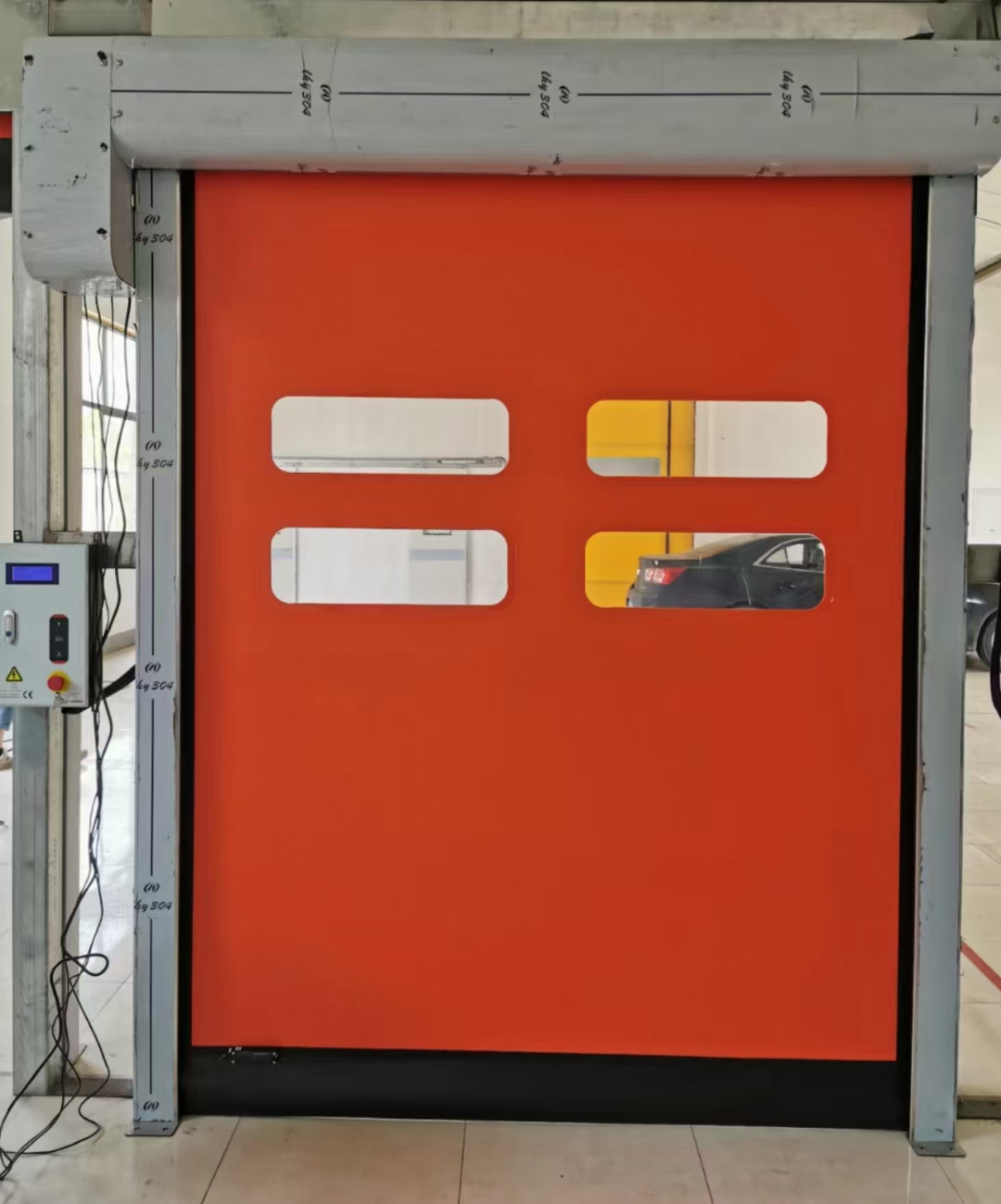
2. Drive and Control Systems
Motor:
Servo-driven motors (0.55–1.5 kW) with variable frequency control, compatible with 220V/380V power supplies for precise speed adjustment (0.6–2.0 m/s).
Control Unit:
Programmable logic controllers (PLCs) with 485 communication or wireless protocols (Wi-Fi, ZigBee) enable integration with IoT platforms and AGV/AMR systems.
Transmission System:
Utilizes dual-axle (PUSH-PULL) belt or chain drives for seamless curtain movement.
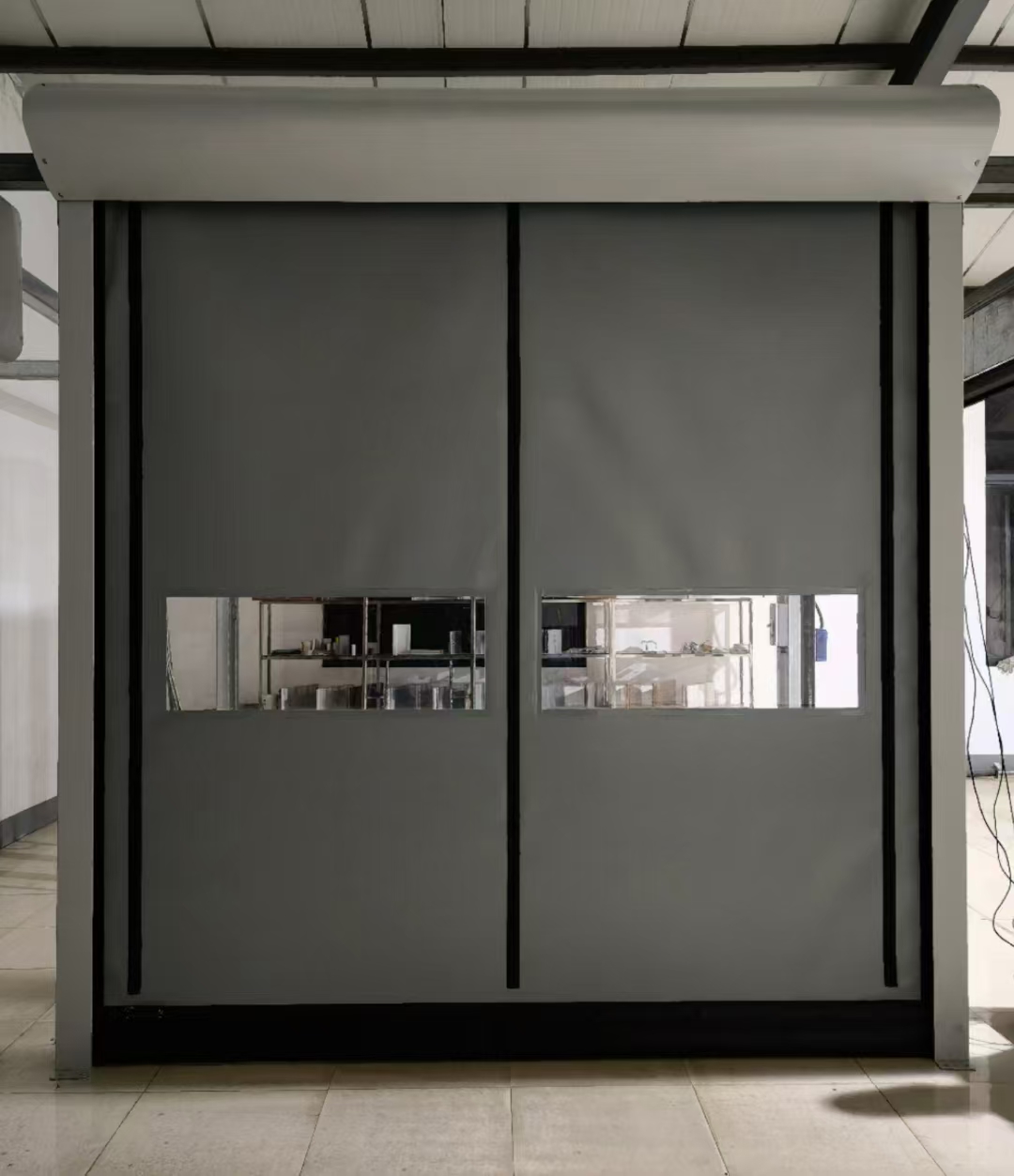
3. Auxiliary Components
Sealing and Safety:
Seals: EPDM gaskets or brush seals on both sides, combined with ground-contact bottom edges, achieve ISO Class 7 airtightness.
Safety Devices: Infrared light curtains, pressure-sensitive edges (trigger force ≤2 kg), and multi-point safety sensors prevent collisions.
Frame and Tracks:
Constructed from corrosion-resistant 304 stainless steel or hot-dip galvanized steel (2.0 mm thickness), supporting custom dimensions up to 6m (width) × 8m (height).
Automatic Realignment System:
Self-recovery mechanism repositions the curtain after derailment without manual intervention, reducing downtime.
4. Technical Specifications and Compliance
| Parameter | Value/Standard |
|---|---|
| Speed | 0.6–2.0 m/s (adjustable) |
| Wind Resistance | ≤35 m/s (with reinforcement) |
| Temperature Range | -30°C to 70°C |
| Certifications | CE (Machinery Directive 2006/42/EC), UL 325, ISO 9001 |
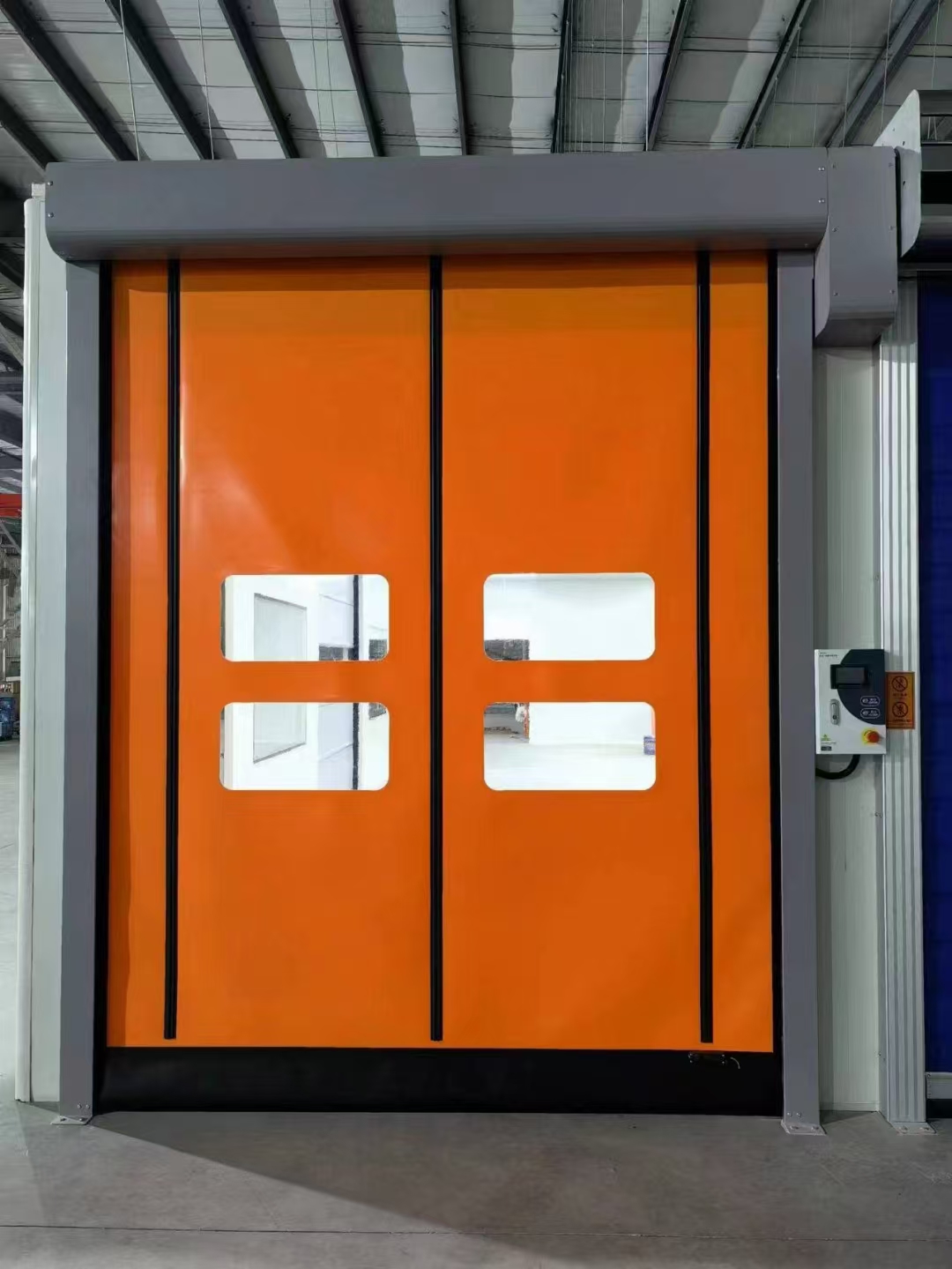
5. Industry Applications and Future Trends
Logistics/Cold Chain: High cycling capacity (≥800 cycles/day) and airtight seals reduce energy loss by 15–25%.
Smart Manufacturing: IoT integration enables predictive maintenance and real-time diagnostics.
Sustainability: Recyclable materials (≥90%) and IE3-rated motors align with green building standards (e.g., LEED).
Conclusion
Zipper doors combine modular design, robust materials, and intelligent automation to meet the demands of modern industrial environments. Their adaptability to IoT and Industry 4.0 frameworks positions them as a versatile solution for energy-efficient, high-throughput operations. For technical details, refer to international standards or consult engineering guidelines.
Q1: What are the key structural components of industrial zipper doors?
A1: The core components include:
Zipper track system (aluminum/steel guides with interlocking teeth)
Flexible curtain (reinforced PVC or TPU fabric with UV treatment)
Drive mechanism (motorized or manual zipper pull system)
Control unit (PLC/HMI for automated operation)
Safety features (emergency release, obstacle detection sensors)
Industry Standards:Complies with EN 13241-1 for industrial doors and ISO 9001 for quality management.
Q2: How does the zipper sealing mechanism ensure airtight performance?
A2: The sealing system works through:
Dual-track interlock - Overlapping teeth create a labyrinth seal
Inflatable gaskets (optional) - Pneumatic tubes enhance pressure sealing
Magnetic strips - Supplementary seal for critical environments
Testing Standards:Meets ISO 15859 for aerospace cleanliness and ISO 14644 for cleanroom classifications.
Q3: What are the electrical requirements for automated zipper doors?
A3: Typical specifications:
Power supply: 220V/380V AC ±10%, 50/60Hz
Motor power: 0.5-3kW (based on door size)
Control voltage: 24V DC safety circuit
IP rating: Minimum IP54 for dust/water resistance
Compliance:IEC 60204-1 for safety of machinery electrical equipment.
Q4: How do zipper doors maintain structural integrity in high-traffic environments?
A4: Durability features include:
Wear-resistant coatings on zipper teeth (minimum 100,000 cycles)
Impact-absorbing bumpers at contact points
Modular design for easy component replacement
Corrosion protection
Recommended Products
up to dateQatar Automatic Door Accessories
- Durable PVC Fast Rolling Door Fittings for Enhanced Security
- Automatic Repair of Zipper Door Plastic/Polymer Rails
- Smart Automatic Door Sensor for Fast Rolling Access Control
- Soft Fast Gate Control System 1.5kw Servo Motor and Control Box
- Automatic Access Control Square Surface Mount Infrared Non-Contact Switch
- Explosion-Proof Reinforced Self-Limiting Electric Heating Belt
- Explosion-Proof Shielded Self-Controlling Temperature Electric Heating Belt
- Heating Belt for Anti-Freezing, Heating and Heat Preservation of Cold Storage Doors
- 40W flame retardant explosion-proof self-limiting electric heating belt
- High Speed Door Zippers Industrial Door Zippers
- Safety Beam Sensor Use for Automatic Door
- Wireless Hand Sensor Switch For Automatic Door
- Hospital Door Foot Sensor
- Automatic Sliding Door System Wireless Touch Press Switch
- Automatic Sliding Door IP65 Waterprooft Wireless Hand Press Switch
- Automatic Door Microwave Sensor
- Reflective Type Infrared Detector
- Automatic High Speed Door Infrared Radar Sensor CNB-204G
- Aluminum Alloy Wind Section For PVC rapid roller shutter door
- Aluminum Bottom Section For PVC high speed rolling shutter door