

The difference between PVC wind-resistant roller shutter doors with wheels and conventional PVC rapi
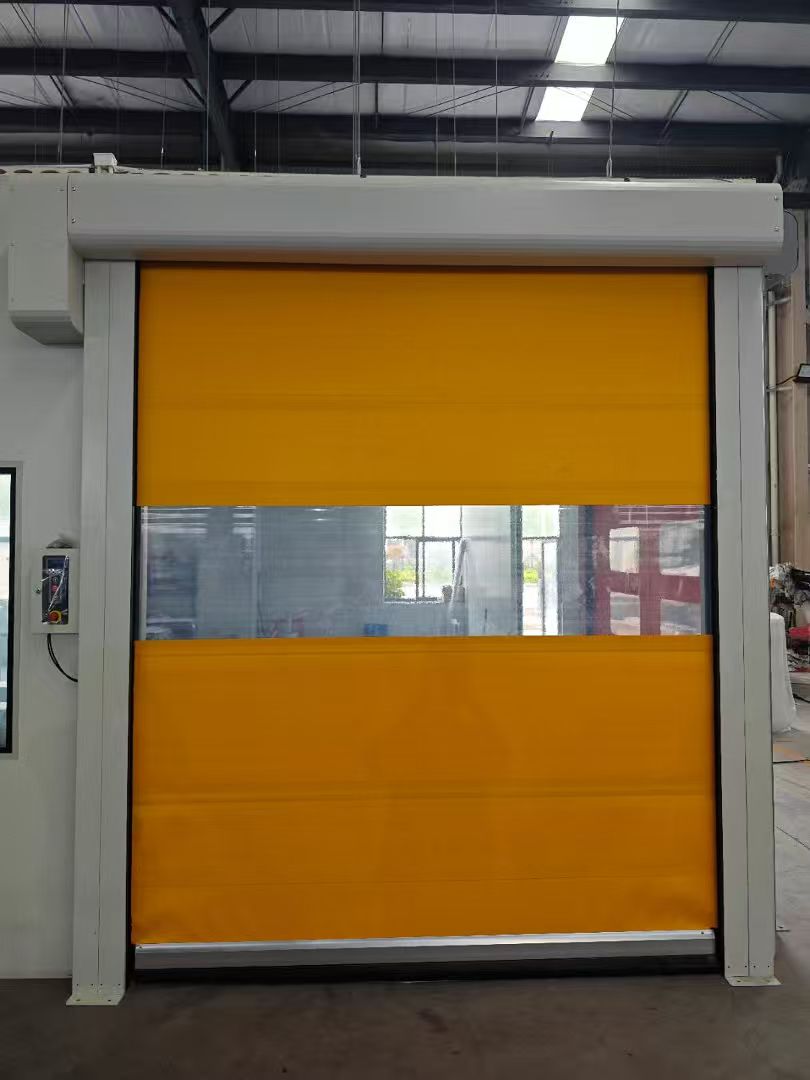
1. Wind Resistance
Wind-Resistant Door with Wheels:
Reinforced Structure: The door curtain is made of high-strength PVC-coated fabric with an integrated wind-resistant frame, enhancing overall durability against strong winds (typically capable of withstanding winds of levels 6–11).
Wheel-and-Track System: Equipped with rolling wheels at the bottom or sides, paired with sturdy guide rails to distribute wind pressure and prevent deformation or derailment.
Ideal for: Warehouses, logistics passages, outdoor workshops, and other wind-prone areas.
Conventional PVC High-Speed Door:
Lightweight Design: The curtain consists of soft PVC material without an internal frame, offering limited wind resistance (usually suitable for winds of levels 4–7).
Speed-Dependent: Relies on rapid opening/closing (speeds of 0.6–1.5 m/s) to minimize wind impact but must remain closed during strong winds.
Ideal for: Indoor workshops, food factories, cleanrooms, and other environments where wind is not a major concern.
2. Structure & Operation
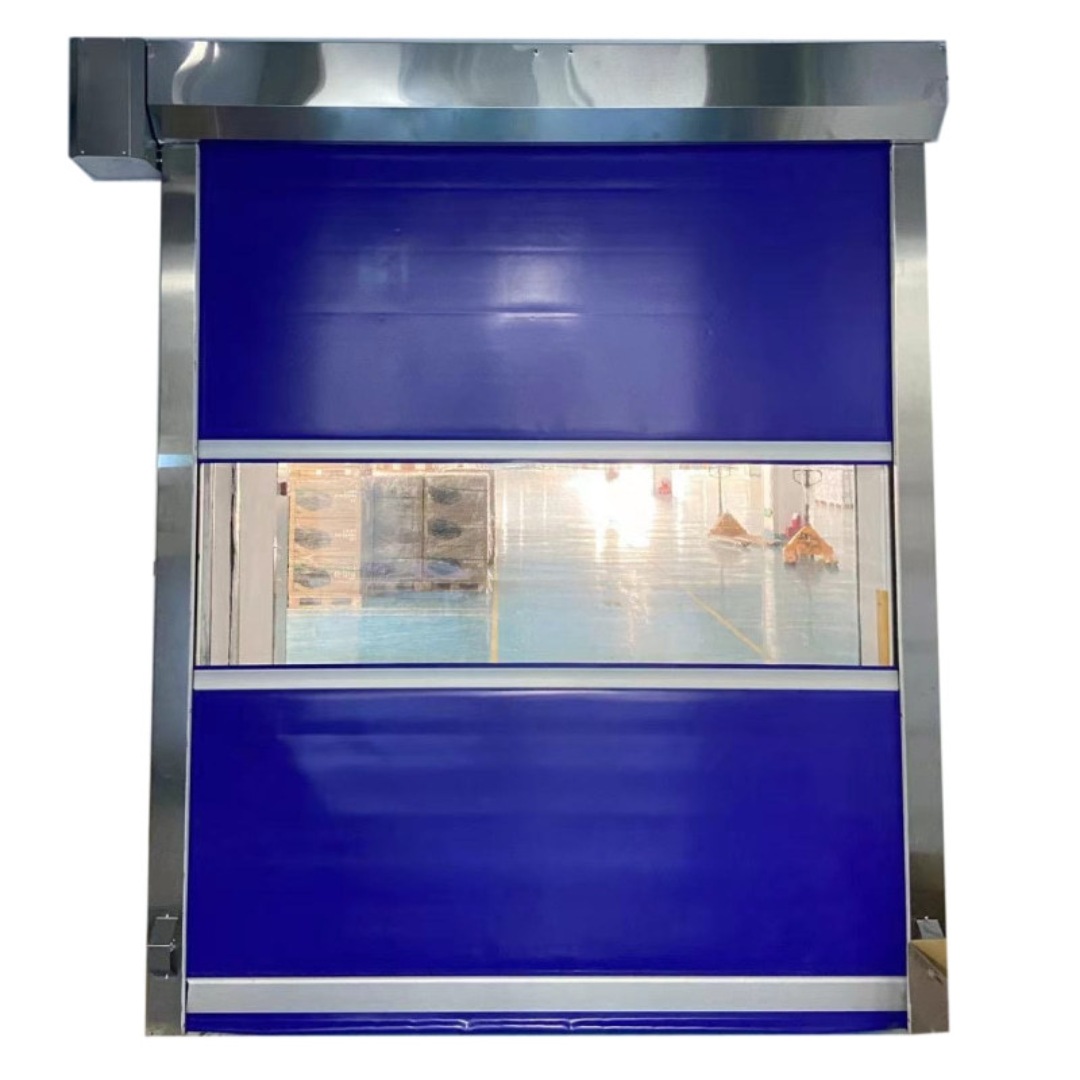
Wind-Resistant Door with Wheels:
Wheel-Guided Movement: Features rollers along the sides or bottom that glide on tracks, ensuring smooth operation and reduced friction, ideal for high-frequency use and windy conditions.
Segmented Design: Some models incorporate segmented wind-resistant bars for enhanced stability when folding or retracting.
Conventional High-Speed Door:
Spring/Turbine-Driven: Uses a torsion spring balance system for rapid rolling, lacking a wheel-track mechanism; the curtain retracts directly into the door box.
Single-Piece Curtain: Made of a continuous PVC sheet without segmented support, lightweight but less wind-resistant.
3. Opening/Closing Speed
Wind-Resistant Type:
Slower (approx. 0.5–1.0 m/s) to prioritize stability and wind resistance.
Conventional Type:
Faster (0.6–1.5 m/s), emphasizing efficiency for high-traffic areas like forklift passages.
4. Sealing & Insulation
Wind-Resistant Type:
Often includes side and bottom seals (e.g., brush or inflatable seals) for better wind, dust, and cold protection, suitable for low-temperature or dusty environments.
Conventional Type:
Basic sealing, focusing on quick partition rather than insulation.
5. Cost & Maintenance
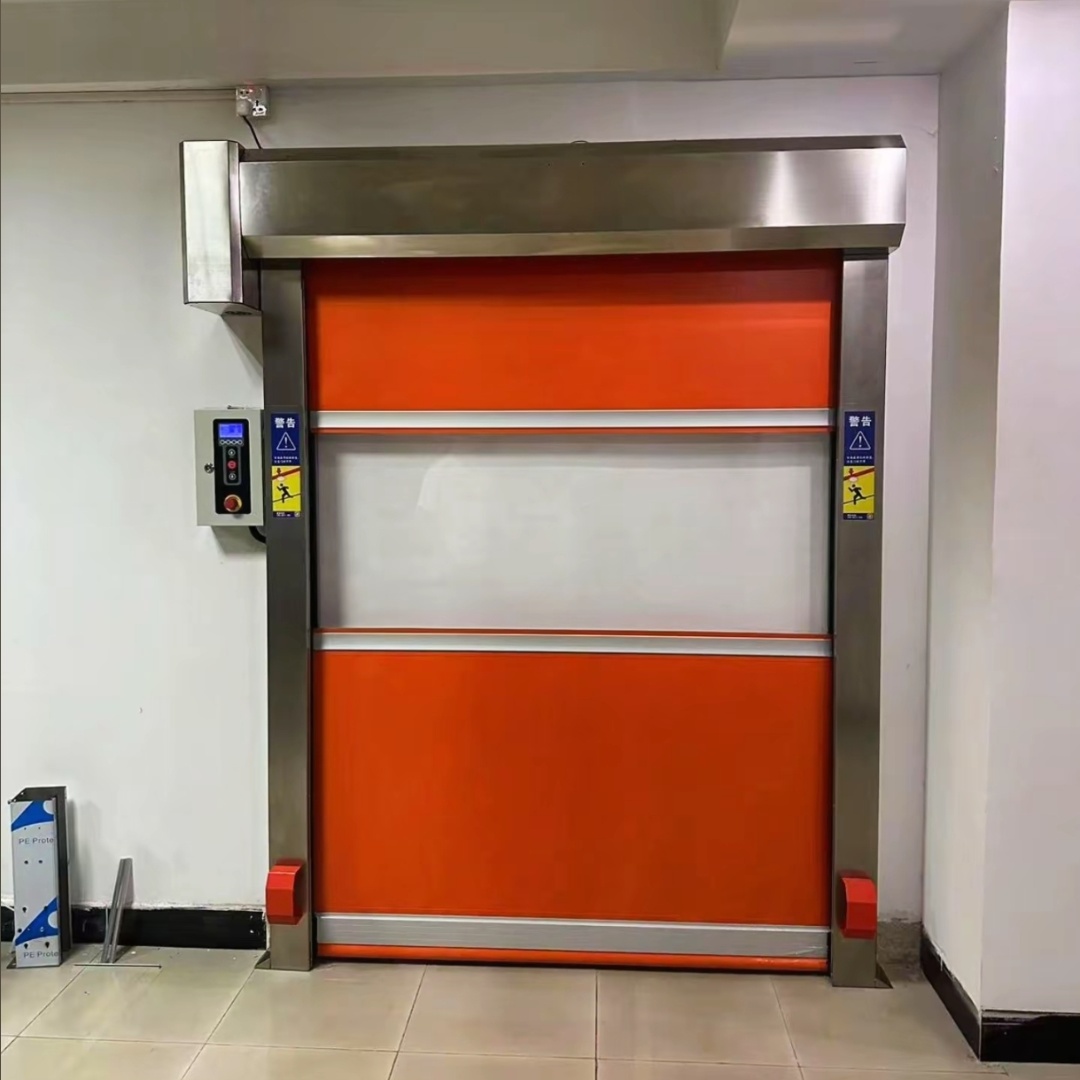
Wind-Resistant Type:
Higher cost (due to complex materials/structure) and requires regular inspection of wheels, tracks, and frame.
Conventional Type:
Lower cost and simpler maintenance (mainly checking the curtain and springs).
Selection Guide
Choose Wind-Resistant Doors with Wheels: For outdoor, windy, or demanding environments requiring durability and sealing (e.g., coastal areas, large logistics hubs).
Choose Conventional High-Speed Doors: For indoor, low-wind settings where cost and speed are priorities (e.g., packaging lines, retail warehouses).
1. Structural Differences
Q1: What is the main structural difference between these two door types?
A:
Wheeled Wind-Resistant Doors: Feature nylon guide wheels embedded in curtain slats + reinforced aluminum tracks for smooth high-wind operation.
Conventional Rapid Doors: Use side-mounted PVC seals without wheels, relying on tensioned curtain material.
Q2: How do wheels improve performance?
A: The wheel-track system reduces friction by 60%, enabling stable operation in winds up to 12级 (Beaufort scale) versus 8级 for conventional models.
2. Wind Resistance Comparison
Q3: What wind speed can each door withstand?
A:
Wheeled Version: Certified for 120km/h winds (with optional cross-bracing)
Conventional: Rated for 75km/h winds maximum
Q4: How is wind resistance achieved differently?
A:
Wheeled Doors: Interlocking slat design + vertical reinforcement bars distribute wind load.
Conventional Doors: Depend on curtain thickness (typically 1.2-1.5mm PVC) and bottom bar weight.
Recommended Products
up to dateMalta Automatic Door Accessories
- Durable PVC Fast Rolling Door Fittings for Enhanced Security
- Automatic Repair of Zipper Door Plastic/Polymer Rails
- Smart Automatic Door Sensor for Fast Rolling Access Control
- Soft Fast Gate Control System 1.5kw Servo Motor and Control Box
- Automatic Access Control Square Surface Mount Infrared Non-Contact Switch
- Explosion-Proof Reinforced Self-Limiting Electric Heating Belt
- Explosion-Proof Shielded Self-Controlling Temperature Electric Heating Belt
- Heating Belt for Anti-Freezing, Heating and Heat Preservation of Cold Storage Doors
- 40W flame retardant explosion-proof self-limiting electric heating belt
- High Speed Door Zippers Industrial Door Zippers
- Safety Beam Sensor Use for Automatic Door
- Wireless Hand Sensor Switch For Automatic Door
- Hospital Door Foot Sensor
- Automatic Sliding Door System Wireless Touch Press Switch
- Automatic Sliding Door IP65 Waterprooft Wireless Hand Press Switch
- Automatic Door Microwave Sensor
- Reflective Type Infrared Detector
- Automatic High Speed Door Infrared Radar Sensor CNB-204G
- Aluminum Alloy Wind Section For PVC rapid roller shutter door
- Aluminum Bottom Section For PVC high speed rolling shutter door