

La diferencia entre las puertas de persianas de PVC resistentes al viento con ruedas y las de PVC convencionales
1. Resistencia del viento
Puerta resistente al viento con ruedas:
Estructura reforzada: La cortina de la puerta está hecha de tela recubierta de PVC de alta resistencia con un marco resistente al viento integrado, lo que mejora la durabilidad general contra los fuertes vientos (normalmente capaz de resistir vientos de niveles 6 - 11).
Sistema Wheel-and - Track: Equipado con ruedas rodantes en la parte inferior o lateral, emparejadas con rieles guía resistentes para distribuir la presión del viento y evitar la deformación o el descarrilamiento.
Ideal para: Almacenes, pasajes logísticos, talleres al aire libre y otras áreas propensas al viento.
Puerta PVC de alta velocidad:
Diseño ligero: La cortina consiste en material PVC blando sin marco interno, ofreciendo una resistencia al viento limitada (normalmente adecuada para vientos de niveles 4 - 7).
Dependiente de velocidad: Se basa en una rápida apertura / cierre (velocidades de 0,6 - 1,5 m / s) para minimizar el impacto del viento, pero debe permanecer cerrado durante los vientos fuertes.
Ideal para: Talleres interiores, fábricas de alimentos, salas limpias y otros entornos donde el viento no es una preocupación importante.
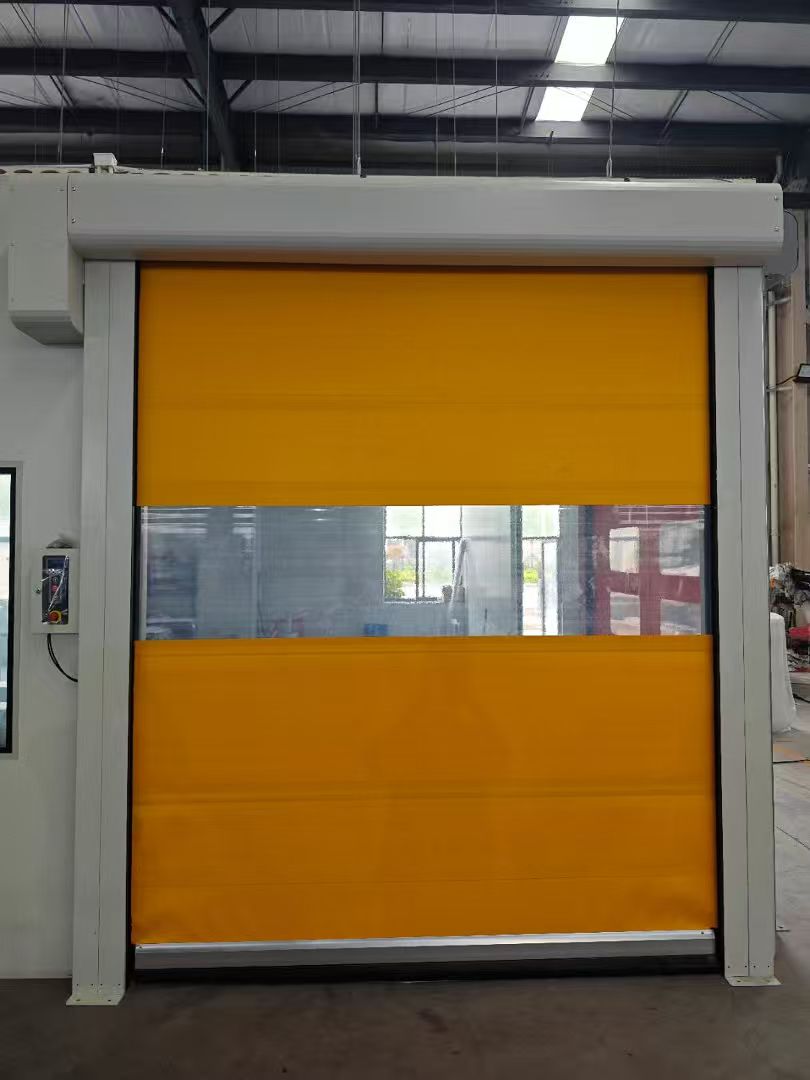
2. Estructura y operación
Puerta resistente al viento con ruedas:
Movimiento de ruedas guiadas: Cuenta con rodillos a lo largo de los lados o la parte inferior que se deslizan sobre las vías, garantizando un funcionamiento suave y una fricción reducida, ideal para uso de alta frecuencia y condiciones de viento.
Diseño segmentado: Algunos modelos incorporan barras segmentadas resistentes al viento para una mayor estabilidad cuando se pliega o se retrae.
Puerta convencional de alta velocidad:
Spring / Turbine-Driven: Utiliza un sistema de equilibrio de resorte de torsión para rodar rápidamente, careciendo de un mecanismo de rueda-pista; la cortina se retrae directamente en la caja de la puerta.
Una sola cortina: Fabricado en una lámina de PVC continua sin soporte segmentado, ligero pero menos resistente al viento.
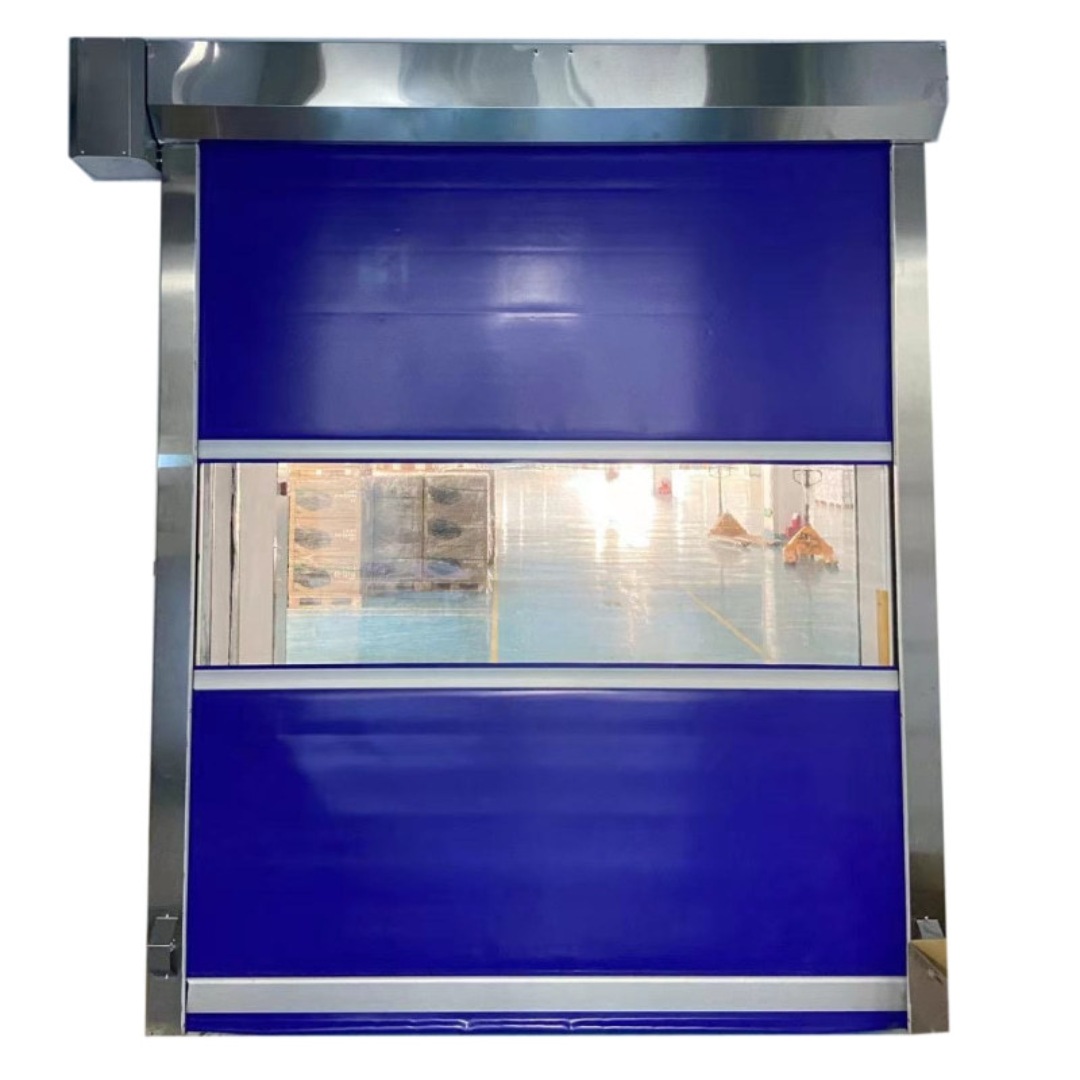
3. Velocidad de apertura / cierre
Tipo resistente al viento:
Más lentamente (aprox. 0,5 - 1,0 m / s) para priorizar la estabilidad y la resistencia al viento.
Tipo convencional:
Más rápido (0,6 - 1,5 m / s), haciendo hincapié en la eficiencia en áreas de alto tráfico, como los pasillos de carretillas elevadoras.
4. Sealing y aislamiento
Tipo resistente al viento:
A menudo incluye sellos laterales e inferiores (por ejemplo, cepillo o sellos inflables) para una mejor protección contra el viento, el polvo y el frío, adecuado para entornos de baja temperatura o polvorientos.
Tipo convencional:
Sellado básico, centrándose en la partición rápida en lugar de aislamiento.
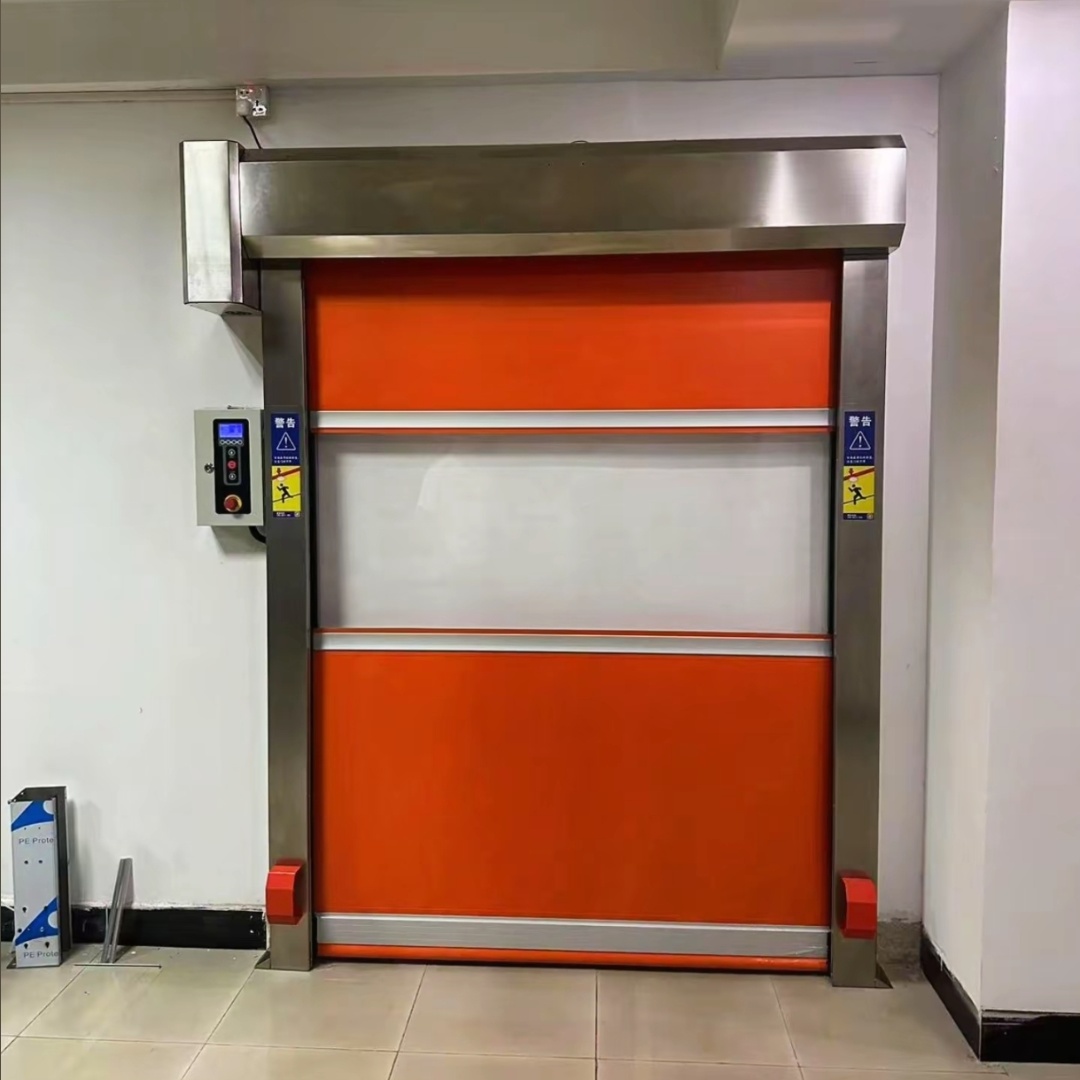
5. Costo y mantenimiento
Tipo resistente al viento:
Mayor costo (debido a materiales / estructura complejos) y requiere una inspección regular de las ruedas, las vías y el marco.
Tipo convencional:
Menor costo y mantenimiento más sencillo (principalmente comprobando la cortina y los muelles).
Guía de selección
Elegir puertas resistentes al viento con ruedas: Para ambientes exteriores, ventosos o exigentes que requieren durabilidad y sellado (por ejemplo,áreas costeras, grandes centros logísticos).
Elegir puertas convencionales de alta velocidad: Para ambientes interiores con viento bajo donde el costo y la velocidad son prioridades (por ejemplo, líneas de embalaje, almacenes minoristas).
1. Diferencias estructurales
P1: ¿Cuál es la principal diferencia estructural entre estos dos tipos de puertas?
a:
Puertas de ruedas resistentes al viento: Características de ruedas de guía de nylon incrustadas en listones de cortina + rieles de aluminio reforzado para un funcionamiento suave con viento alto.
Puertas rápidas convencionalesUtilice sellos de PVC montados lateralmente sin ruedas, confiando en el material de cortina tensada.
P2: ¿Cómo mejoran las ruedas el rendimiento?
R: El sistema de ruedas-carriera reduce la fricción en un 60%, permitiendo un funcionamiento estable en vientos de hasta grado 12 (escala Beaufort) frente al grado 8 para los modelos convencionales.
2. Comparación de resistencia al viento
Q3: ¿Qué velocidad de viento puede soportar cada puerta?
a:
Versión de ruedasCertificado para vientos de 120 km / h (con soporte cruzado opcional)
convencionalClasificado para 75 km / h vientos máximos
Q4: ¿Cómo se logra la resistencia al viento de manera diferente?
a:
Puertas de ruedasDiseño de rejillas entrelazadas + barras de refuerzo verticales distribuyen la carga del viento.
Puertas convencionalesDependiendo del grosor de la cortina (normalmente de PVC de 1,2 - 1,5 mm) y el peso de la barra inferior.
Productos recomendados
Accesorios de puertas automáticas
- Sensor de borde de seguridad para protección contra aplastamiento de puertas rodantes rápidas
- Puerta de alta velocidad 0.75KW Servomotor Control Box Set - Solución de accionamiento confiable y eficiente
- Servomotor de 1.5KW y combinación de caja de control - Sistema de accionamiento de alta eficiencia para puertas industriales
- Zippers de puertas industriales y zippers de puertas de alta velocidad - Accesorios de puertas industriales duraderos
- Sistema de accionamiento servo de puerta de alta velocidad de 0.75KW - Solución industrial confiable y de ahorro de energía
- Activador del pedal del pie y sensor de barrera de luz de seguridad para puertas correderas médicas
- Zippers de puertas industriales y zippers de puertas de alta velocidad - Accesorios de puertas industriales duraderos
- Control remoto de cortina eléctrica AOK-AC123 - Diseño inalámbrico con panel de cristal acrílico resistente al desgaste
- Servomotor síncrono de imán permanente con mecanismo de reducción de gusano para puerta de alta velocidad
- Servomotor síncrono de precisión para puerta de alta velocidad - reducción de engranajes de gusano
- Nuevo interruptor de sensor infrarrojo impermeable montado en superficie
- Acessorios de puertas rodantes rápidas de PVC duraderos para una mayor seguridad
- Reparación automática de rieles de plástico / polímero de puerta de cremallera
- Sensor de puerta automática inteligente para control de acceso de rodadura rápida
- Sistema de control de puerta rápida suave 1.5kw Servomotor y caja de control
- Control de acceso automático de superficie cuadrada de montaje infrarrojo interruptor sin contacto
- Cinturón de calefacción eléctrica autolimitante reforzado a prueba de explosiones
- Cinturón de calefacción eléctrica autocontrolada a prueba de explosiones
- Cinturón de calefacción para anticongelante, calefacción y preservación de calor de puertas de almacenamiento en frío
- Cinturón de calefacción eléctrica autolimitante a prueba de explosiones retardante de llama de 40W