

La différence entre les volets roulants en PVC résistants au vent avec roues et les portes en PVC conventionnelles
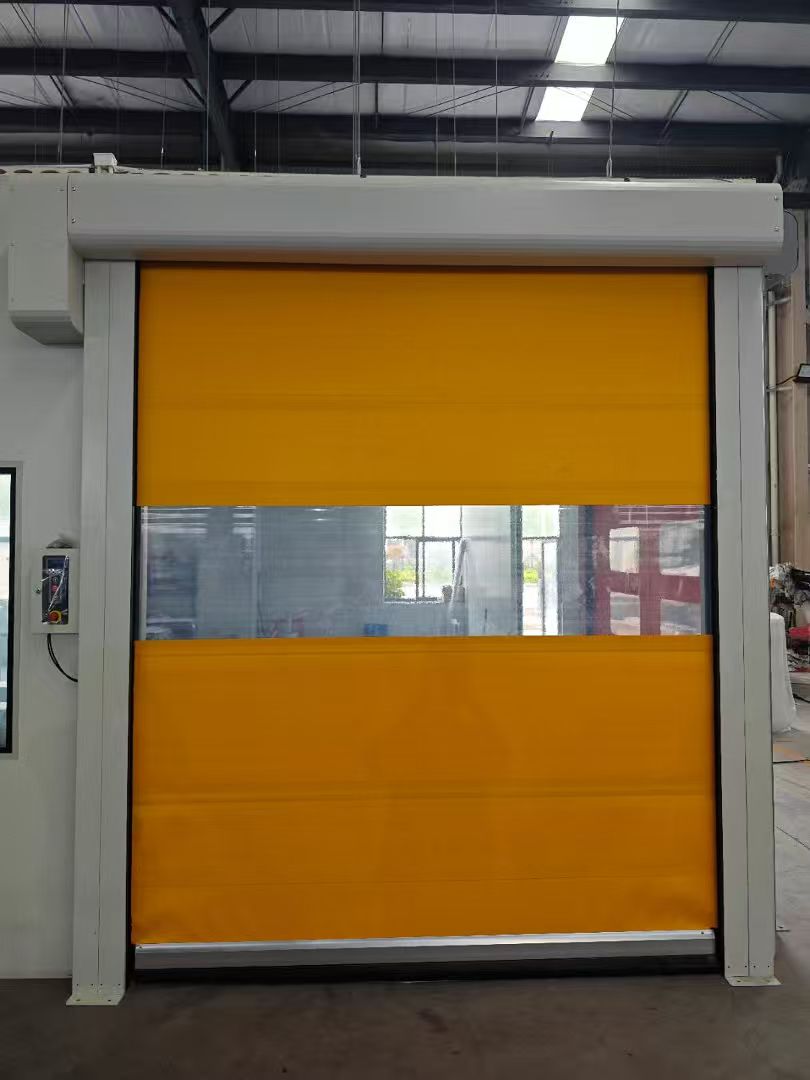
1. Résistance au vent
Portes résistantes au vent avec roues :
Structure renforcée : Le rideau de porte est fabriqué en tissu revêtu de PVC haute résistance avec un cadre résistant au vent intégré, améliorant la durabilité globale contre les vents forts (généralement capable de résister aux vents de niveaux 6 - 11).
Système Wheel-and - Track : Équipé de roues roulantes en bas ou sur les côtés, jumelé à des rails de guidage robustes pour répartir la pression du vent et éviter la déformation ou le déraillement.
Idéal pour : Entrepôts, passages logistiques, ateliers extérieurs et autres zones sujettes au vent.
Porte haute vitesse PVC conventionnelle :
Design léger : Le rideau est constitué d'un matériau en PVC souple sans cadre interne, offrant une résistance au vent limitée (habituellement adaptée aux vents de niveau 4 - 7).
vitesse dépendante : Il s'appuie sur une ouverture / fermeture rapide (vitesse de 0,6 à 1,5 m / s) pour minimiser l'impact du vent, mais doit rester fermé lors de vents forts.
Idéal pour : Les ateliers intérieurs, les usines alimentaires, les salles blanches et autres environnements où le vent n'est pas une préoccupation majeure.
2. Structure & Opération
Portes résistantes au vent avec roues :
Mouvement guidé par roue : Des rouleaux le long des côtés ou du fond qui glissent sur les rails, garantissant un fonctionnement en douceur et une réduction des frottements, idéal pour une utilisation à haute fréquence et dans des conditions venteuses.
Design segmenté : Certains modèles intègrent des barres segmentées résistantes au vent pour une stabilité accrue lors du pliage ou de la rétraction.
Porte haute vitesse conventionnelle :
Spring / Turbine-Driven : Utilise un système d'équilibrage à ressort de torsion pour un roulement rapide, sans mécanisme de roue-traînée ; le rideau se rétracte directement dans la boîte de porte.
Rideaux Single-Piece : Fabriqué en feuille de PVC continue sans support segmenté, léger mais moins résistant au vent.
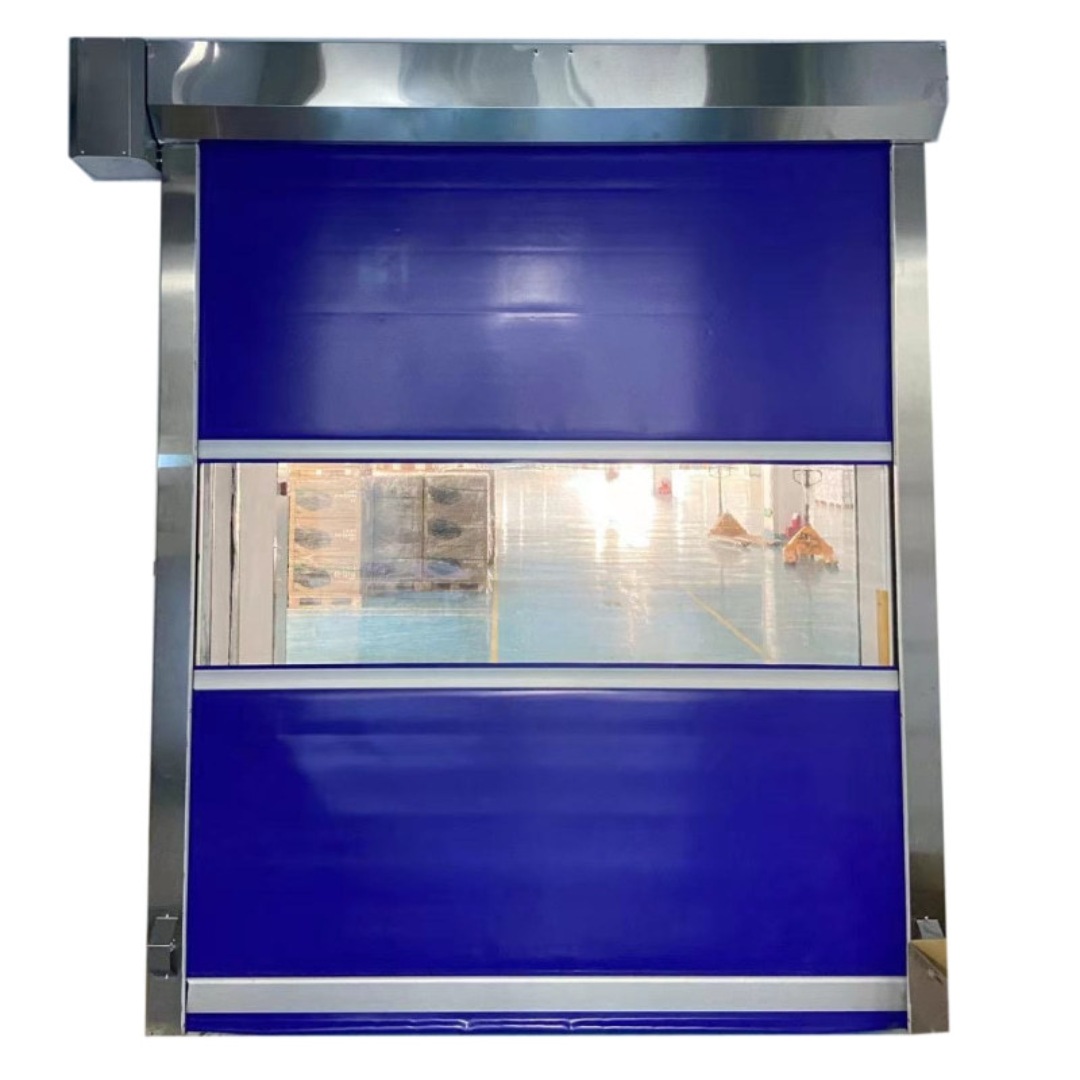
3. Vitesse d'ouverture / fermeture
Type résistant au vent :
Plus lentement (approximativement). 0,5 - 1,0 m / s) pour donner la priorité à la stabilité et à la résistance au vent.
Type conventionnel :
Plus rapide (0,6 - 1,5 m / s), en mettant l'accent sur l'efficacité pour les zones à fort trafic comme les passages de chariots élévateurs.
4. Sealing & Isolation
Type résistant au vent :
Comprend souvent des joints latéraux et inférieurs (par exemple, brosses ou joints gonflables) pour une meilleure protection contre le vent, la poussière et le froid, adapté aux environnements à basse température ou poussiéreux.
Type conventionnel :
L'étanchéité de base, axée sur la partition rapide plutôt que sur l'isolation.
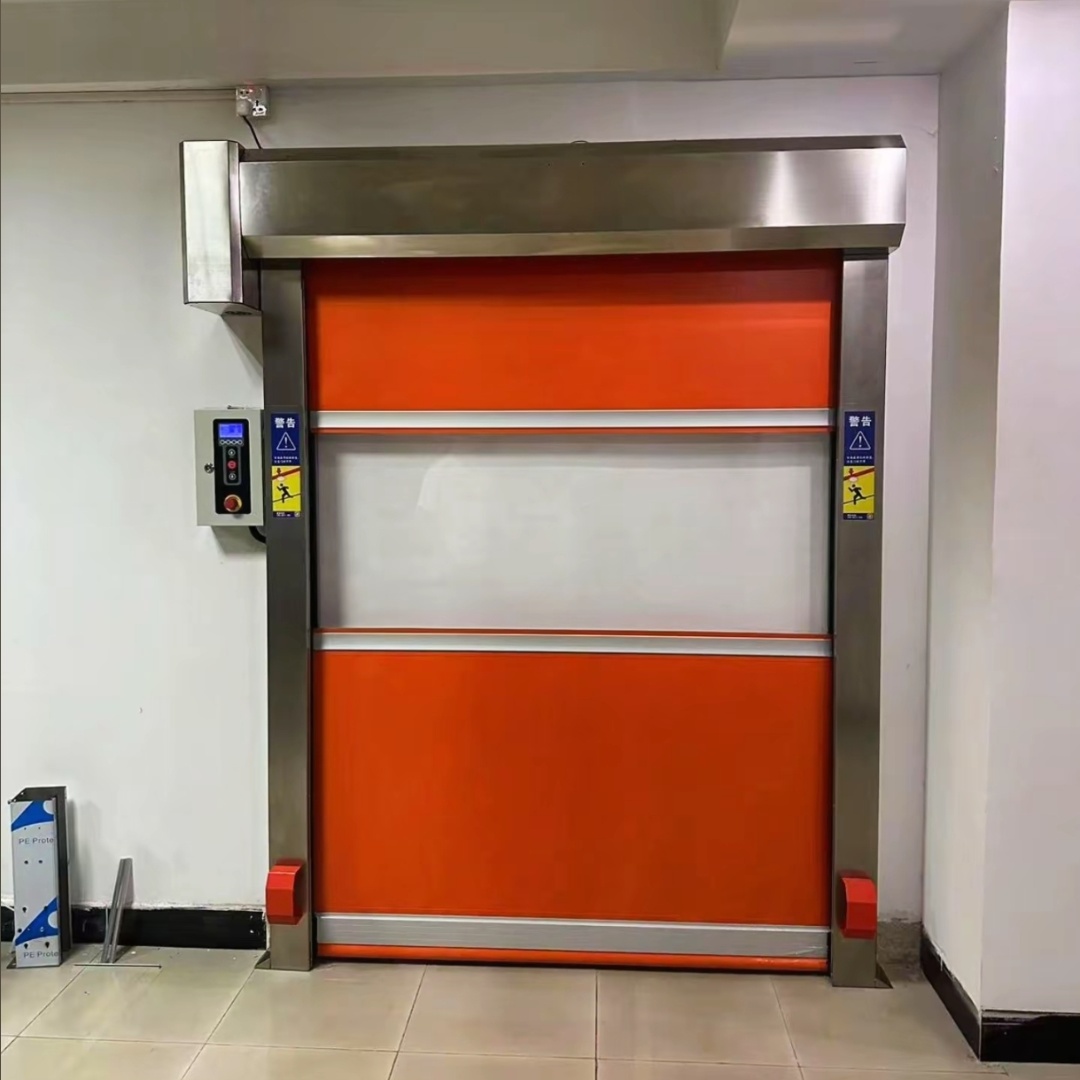
5. Coût & Maintenance
Type résistant au vent :
Coût plus élevé (en raison de matériaux / structure complexes) et nécessite une inspection régulière des roues, des rails et du cadre.
Type conventionnel :
Moins de coûts et entretien plus simple (principalement vérification du rideau et des ressorts).
Guide de sélection
Choisissez des portes résistantes au vent avec roues : Pour les environnements extérieurs, venteux ou exigeants nécessitant une durabilité et une étanchéité (par exemple, les zones côtières, les grands centres logistiques).
Choisissez les portes haute vitesse conventionnelles : Pour les environnements intérieurs à vent faible où le coût et la vitesse sont des priorités (par exemple, lignes d'emballage, entrepôts de détail).
1. Différences structurelles
Q1 : Quelle est la principale différence structurelle entre ces deux types de portes ?
A :
Porte à roues Wind-Resistant: Features roues de guidage en nylon intégrées dans des lames de rideau + rails en aluminium renforcé pour un fonctionnement en douceur par vent fort.
Porte rapide conventionnelle: Utilisez des joints en PVC montés latéralement sans roues, en s'appuyant sur un matériau de rideau tendu.
Q2 : Comment les roues améliorent-elles les performances ?
R : Le système roue-traînée réduit le frottement de 60 %, permettant un fonctionnement stable dans des vents allant jusqu'à la classe 12 (échelle de Beaufort) contre la classe 8 pour les modèles conventionnels.
2. Comparaison de la résistance au vent
Q3 : Quelle vitesse de vent chaque porte peut résister ?
A :
Version roue: Certifié pour les vents de 120 km / h (avec support croisé en option)
Conventionnel: Noté pour 75 km / h de vent maximum
Q4 : Comment la résistance au vent est-elle obtenue différemment ?
A :
Porte à roues: Conception de lamelles verrouillées + barres de renforcement verticales répartissent la charge du vent.
Porte conventionnelle: dépend de l'épaisseur du rideau (généralement 1,2 - 1,5 mm de PVC) et du poids de la barre inférieure.
Produits recommandés
Accessoires de porte automatique
- Capteur de bord de sécurité pour la protection anti-écrasement de la porte roulante rapide
- Boîte de commande servo-moteur 0,75KW à porte haute vitesse - Solution d'entraînement fiable et efficace
- Servo-moteur de 1,5 kW et boîte de commande - système d'entraînement à haute efficacité pour portes industrielles
- Fermetures à glissières de porte industrielles et fermetures à glissières de porte à grande vitesse - Accessoires de porte industriels durables
- Servo-entraînement à porte haute vitesse de 0,75KW - Solution industrielle fiable et économe en énergie
- Activateur de pédale de pied et capteur de barrière de faisceau de sécurité pour les portes coulissantes médicales
- Fermetures à glissières de porte industrielles et fermetures à glissières de porte à grande vitesse - Accessoires de porte industriels durables
- AOK-AC123 Rideau électrique Télécommande - Design sans fil avec vitrage en cristal acrylique résistant à l'usure
- Servo-moteur synchrone AC à aimant permanent avec mécanisme de réduction de ver pour porte à grande vitesse
- Servo-moteur synchrone de précision pour réduction de vitesse de porte haute vitesse
- Nouveau commutateur de capteur infrarouge imperméable à la surface
- Remplaçages de porte en PVC durables pour une sécurité renforcée
- Réparation automatique des rails en plastique / polymère de porte à fermeture à glissière
- Capteur de porte automatique intelligent pour le contrôle d'accès à roulement rapide
- Système de commande de porte rapide souple 1.5kw Servo moteur et boîte de commande
- Contrôle d'accès automatique Square Surface Mount Infrared Non-Contact Switch
- Ceinture de chauffage électrique auto-limitante renforcée à l'épreuve des explosions
- Ceinture de chauffage électrique à température auto-controllée à l'épreuve des explosions
- Ceinture de chauffage pour antigel, chauffage et préservation de la chaleur des portes de stockage froid
- Ceinture de chauffage électrique auto-limité ignifuge 40W anti-explosion