

Single‑Track vs Double‑Track Garage Doors: Installation Space Requirements & Selection
Lintel height (vertical clearance from the top of door opening to ceiling) is the core deciding factor. Single‑track systems require ≥35 cm lintel clearance; double‑track systems suit narrow lintels from 20‑35 cm.
The two track types follow completely different opening trajectories. Double‑track doors tilt inward requiring only ~5 cm overhead flip space; single‑track panels lift vertically with a minimum 15 cm upward travel. Fitting single‑track onto insufficient lintel space will reduce usable drive‑through height.
Double‑track is not universally superior. For ample lintel clearance and door heights over 2700 mm, single‑track is preferred for higher installation tolerance and fewer failures. Double‑track solves space‑constrained low‑lintel scenarios to preserve passage height. This article includes comparison tables, use‑case guidance and real‑world user FAQs to help you avoid costly re‑work during renovation or retrofitting.
Key Takeaways List
Single‑track system: Requires lintel height ≥35 cm. Simple installation, fewer components, low failure risk. Ideal for garage door openings above 2700 mm.
Double‑track system: Designed for narrow lintel clearance of 20‑35 cm. Panel tilts inward when opening to save overhead flip space and retain full drive‑through height for vehicles.
Target Audience: New‑build villa garages, garage retrofits, self‑build homes with limited overhead opening space, designers and garage‑door procurement specialists.
Solved industry pain points: Miscalculated lintel dimensions lead to reduced clearance where SUVs / high‑roof vehicles cannot enter. Poor fitment causes panel jamming, operating noise and frequent maintenance callbacks.
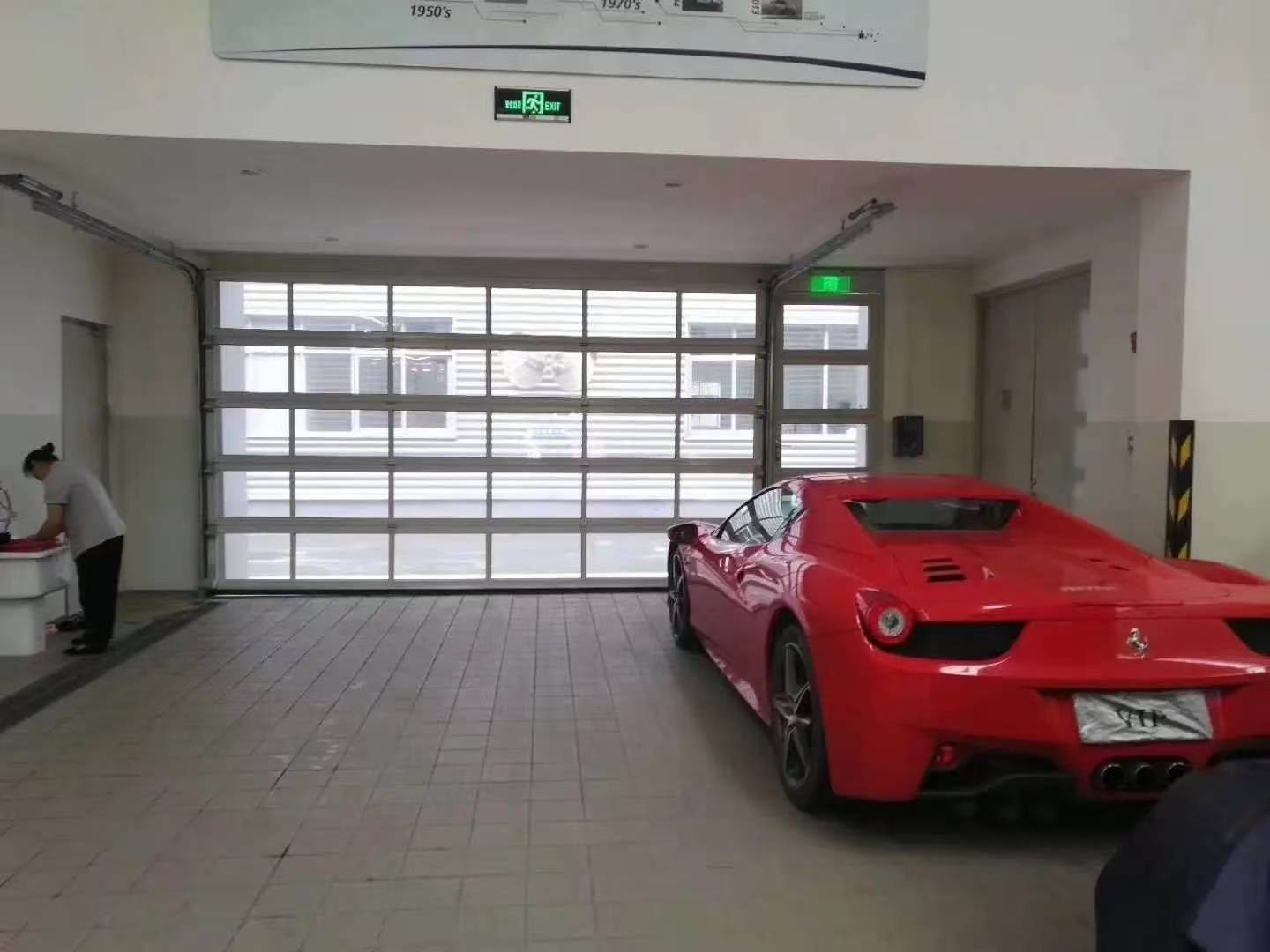
I. Building‑Space Background: Why Single‑Track and Double‑Track Systems Exist
Many homeowners shopping for sectional garage doors only focus on panel material and motor quality while ignoring the critical lintel (Definition: The vertical clear distance measured from the underside of the door‑opening header beam to the garage ceiling; the most important building dimension for track installation). Lintel dimensions vary widely between properties. Existing beams or lowered ceilings often leave very limited vertical overhead room.
Sectional garage doors operate by flipping upward and running horizontally underneath the ceiling. This flipping motion consumes vertical overhead space above the doorway. Insufficient clearance prevents full panel rotation, reduces actual opening height and stops SUVs or high‑roof vehicles from driving inside. To accommodate varying site conditions, manufacturers developed single‑track and double‑track configurations to resolve overhead‑space constraints for different garages.
Recommended Application Scenarios
New‑build standard villa garages with ≥35 cm lintel clearance: prioritize single‑track systems.
Retrofitted garages and self‑build homes with beams / lowered ceilings and 20‑35 cm lintels: double‑track is mandatory.
Garages with overall low opening height of 2000‑2400 mm where maximum passage clearance must be preserved: choose double‑track.
Door openings taller than 2700 mm: even with lintel near 30 cm, evaluate single‑track to minimise long‑term failure risk.
| Comparison Item | Single‑Track System | Double‑Track System (Low‑Lintel Special) |
|---|---|---|
| Minimum required lintel height | ≥350 mm (35 cm) | 200‑350 mm (20‑35 cm) |
| Door‑panel opening trajectory | Panel lifts vertically ≥15 cm before transferring to horizontal track | Panel tilts inward toward garage interior; only ~5 cm flip space required before entering horizontal track |
| Impact on drive‑through clearance | Nearly zero height loss with adequate lintel; significant height reduction if lintel is insufficient | Preserves maximum vehicle passage height for narrow‑lintel sites; suitable for SUV and high‑roof vehicles |
| Component setup | One set of curved + horizontal track; few parts | Additional pair of small curved track elements; more assembly components |
| Installation tolerance | High; minor building‑structure imperfections can be compensated during commissioning; low installation difficulty | Low; requires precise wall & opening dimensions; final performance heavily depends on installer workmanship |
| Expected failure rate | Fewer components, low roller‑jamming risk; simple ongoing maintenance | More joint points; mis‑adjustment leads to noise and panel binding |
| Suitable overall door‑opening height | Tall garage openings ≥2700 mm | Low‑height garage openings 2000‑2400 mm |
II. Core Operating Principles: How Track Motion Consumes Overhead Space
Despite both being upward‑acting sectional garage doors, the biggest difference between these two solutions lies in the very first movement of the door panel when opening. This directly defines how much overhead clearance you must reserve above your doorway.
2.1 Working Principle of Single‑Track Systems
Single‑Track System (Definition: One primary guide track per side. All door rollers travel within this single rail for vertical lift then horizontal transition). On opening, the door panel travels vertically upward. The top edge must rise more than 15 cm before rollers smoothly transfer onto the horizontal track to complete the flip motion.
This means that with less than 35 cm of lintel clearance, ceiling or beam obstructions block vertical travel. The panel cannot fully rotate and usable opening height is reduced by more than ten centimetres — a height sufficient for SUVs may only fit ordinary passenger cars. The hard prerequisite for single‑track installation is therefore minimum 35 cm overhead clearance above the lintel. Benefits include fewer parts, no extra small curved track pieces, straightforward installation, smooth operation once correctly set‑up and few potential fault points.
2.2 Working Principle of Double‑Track (Low‑Lintel) Systems
Double‑Track System (Definition: Inner‑and‑outer paired rails on each side with extra small curved track assemblies, purpose‑built retrofit solution for low‑lintel installations). Instead of lifting straight upward at the start of opening, the door panel first tilts inwards toward the garage interior. Only approximately 5 cm of vertical overhead space is consumed to complete the flip before rollers glide into horizontal track sections.
This “tilt‑in first instead of lift‑up first” motion lowers the lintel requirement from 35 cm down to 20 cm. The tangible benefit is that older garages with narrow lintels can retain maximum drive‑through height without beam demolition or raising the physical doorway, allowing SUVs and high‑roof off‑road vehicles to enter unobstructed. The trade‑off is the extra pair of small curved track elements creating additional mechanical joints. Installation quality becomes critical; poor commissioning can result in operating noise or roller binding issues.
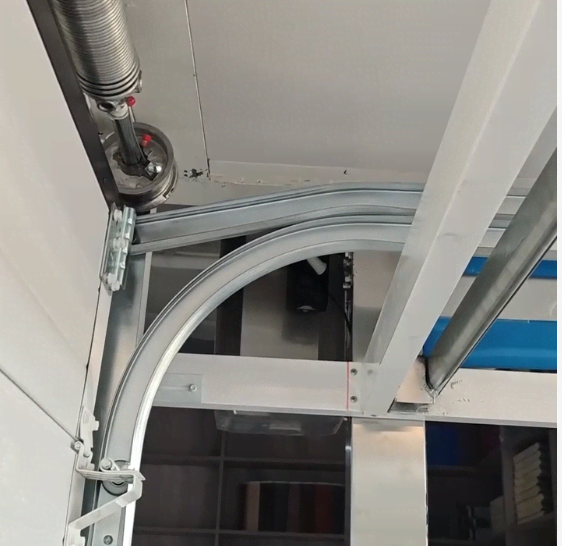
III. Practical Selection Workflow: How To Choose Based On Your Garage Measurements
A common misconception among homeowners is “double‑track is more advanced so always pick double‑track”. In reality your physical building measurements govern the choice. Double‑track is a remedial solution for space constraints — not an all‑round upgrade.
Step 1: Measure your lintel height Use a tape measure and take physical on‑site readings from the underside of the header beam down to the lowest ceiling / beam / ceiling‑obstacle point. Never rely purely on architectural drawings.
Measured ≥35 cm: Prefer single‑track system. Fewer parts, lower failure risk, better value. Strongly recommended for door openings above 2700 mm.
Measured 20‑35 cm: You must select double‑track low‑lintel track set to compensate for spatial limits and preserve passage height.
Measured below 20 cm: Represents an extremely restricted overhead condition. Consult manufacturers for special offset‑spring double‑track options. In some cases sectional doors cannot be fitted and roller shutter doors should be considered as an alternative.
Step 2: Check total garage‑opening height If your opening is inherently low (2100‑2400 mm), even with lintel near 35 cm you may evaluate double‑track to avoid further height loss. For openings of 2800 mm or higher with adequate lintel clearance, single‑track is the logical choice.
Step 3: Assess site construction quality Double‑track systems demand flatter wall surfaces and well‑defined door jambs. Old garages with warped walls increase risk of poor double‑track commissioning. Choose single‑track whenever building conditions permit.
Simple decision summary: Install single‑track when you have ample lintel clearance. Only use double‑track to preserve drive‑through height when building overhead space is limited and structural modifications are undesirable. Double‑track solves a site‑limitation problem rather than delivering optional performance upgrades.
IV. Real‑World Benefits & Consequences Of Your Track Choice
Choosing the wrong track configuration costs far more than extra component expense. Once building finishes, doorway dimensions cannot easily be modified, creating permanent functional drawbacks for your garage.
Benefits of correct single‑track selection: Fewer mechanical fault points; greatly reduced risk of roller binding and operational noise. High installation tolerance allows installers to compensate for minor building imperfections. Lower component cost and simpler long‑term maintenance. Best suited for newly‑built garages with sound building conditions.
Benefits of correct double‑track selection: No beam‑breaking or doorway‑raising building work required. Preserves maximum vehicle passage height within 20‑35 cm lintel constraints, allowing SUV / high‑roof vehicle access. Saves thousands in structural‑renovation expense; widely applied in garage retrofits and self‑build homes with protruding overhead beams.
Costs from poor track selection: Fitting single‑track with insufficient lintel reduces opening height by multiple centimetres so taller vehicles cannot enter. Unnecessary double‑track installation with ample lintel adds extra mechanical joints, raising long‑term noise and binding risk plus ongoing repair expenditure.
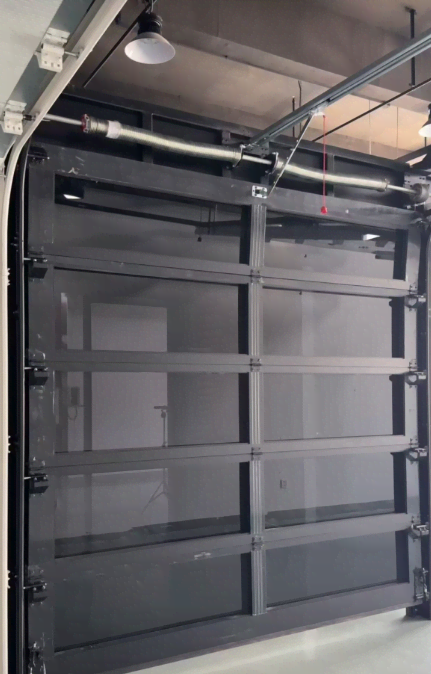
V. Frequently Asked Real‑World User Questions
Q1: Is double‑track always better? Should I install double‑track regardless of conditions?
A: Not recommended. Double‑track is a remedial low‑lintel solution rather than a performance upgrade. Where lintel clearance is ≥35 cm single‑track is preferred. Double‑track adds small curved‑track assemblies and mechanical joints. With good building conditions it introduces unnecessary risk of noise and binding with zero practical gain.
Q2: My lintel measures exactly 34 cm, just 1 cm below single‑track specification. Which track should I pick?
A: Double‑track is preferred. Always measure to the lowest physical overhead obstruction; building tolerances exist. Do not push single‑track at borderline dimensions. Even small shortfalls will reduce usable opening height and this defect cannot be fixed post‑installation.
Q3: Are double‑track garage doors inherently less reliable and expensive to repair?
A: Good‑quality hardware plus skilled installation delivers reliable long‑term double‑track operation. Most failures stem from poor commissioning instead of fundamental design flaws. Replacement parts are standard and reasonably‑priced, yet noise and roller misalignment probabilities are higher compared with single‑track alternatives.
Q4: Can I fit a sectional garage door with only an 18 cm lintel height?
A: Eighteen centimetres represents extremely limited overhead space. Standard double‑track hardware will not work. Discuss offset‑spring special low‑lintel designs with manufacturers. Some sites are unsuitable for sectional doors and roller‑shutter doors become the practical alternative. Never force installation as panel‑to‑structure collisions will occur.
Q5: My existing single‑track door yields insufficient opening height. Can I convert it to double‑track later?
A: Conversion is possible but requires full track‑system replacement. You must remove door panels, motor and all original track hardware before fitting new assemblies. This incurs substantial labour and material cost. Always measure lintel dimensions and confirm track specification prior to installation to avoid post‑project re‑work.
Recommended Products
latestAutomatic Door Accessories
- Safety Edge Sensor for Rapid Roll Door Anti-Crushing Protection
- High-Speed Door 0.75KW Servo Motor Control Box Set – Reliable & Efficient Drive Solution
- 1.5KW Servo Motor & Control Box Combination - High-Efficiency Drive System for Industrial Doors
- Industrial Door Zippers & High Speed Door Zippers - Durable Industrial Door Accessories
- 0.75KW High-Speed Door Servo Drive System - Reliable & Energy-Saving Industrial Solution
- Manufacturers Foot Pedal Activator & Safety Beam Photocell Barrier Sensor for Medical Sliding Doors
- Industrial Door Zippers & High Speed Door Zippers - Durable Industrial Door Accessories
- AOK-AC123 Electric Curtain Remote Control - Wireless Design with Wear-Resistant Acrylic Crystal Pane
- Permanent Magnet AC Synchronous Servo Motor with Worm Reduction Mechanism for High Speed Door
- Precision Synchronous Servo Motor for High-Speed Door – Worm Gear Reduction
- New Surface-Mounted Waterproof Infrared Sensor Switch
- Durable PVC Fast Rolling Door Fittings for Enhanced Security
- Automatic Repair of Zipper Door Plastic/Polymer Rails
- Smart Automatic Door Sensor for Fast Rolling Access Control
- Soft Fast Gate Control System 1.5kw Servo Motor and Control Box
- Automatic Access Control Square Surface Mount Infrared Non-Contact Switch
- Explosion-Proof Reinforced Self-Limiting Electric Heating Belt
- Explosion-Proof Shielded Self-Controlling Temperature Electric Heating Belt
- Heating Belt for Anti-Freezing, Heating and Heat Preservation of Cold Storage Doors
- 40W flame retardant explosion-proof self-limiting electric heating belt