

What Are the Features of PVC Low-Temperature High-Speed Doors? Complete Analysis of Cold Storage Spe
Overview
This guide is tailored for cold chain warehouse owners, cold storage operation managers, and food processing plant supervisors, providing a plain-language breakdown of the core features and practical value of PVC low-temperature high-speed doors:
Designed specifically for extreme temperature difference scenarios ranging from -35°C deep-freeze warehouses to 60°C high-temperature buffer zones, it relies on five synergistic structures: 5-6 layer PVC insulated curtain, track heating anti-freeze system, dual-drum high-speed opening/closing, full-dimensional airtight sealing, and infrared + safety airbag dual protection;
Compared with traditional sliding cold storage doors, door opening duration is reduced by 70%, cold air leakage cut by over 60%, daily refrigeration compressor energy consumption lowered by 15%-28%, and forklift passage efficiency tripled;
The article progresses through three analytical layers: cold chain scenario requirements, core system construction, and component material craftsmanship. It includes complete parameter tables, pros and cons comparison, measurable ROI calculations, and industry FAQ at the end, serving educational, selection reference, and maintenance guidance purposes.
Key List:
Temperature Range: -35°C to +60°C, covering fresh-keeping warehouses, freezers, quick-freeze workshops, and cold chain logistics loading bays;
Core Benefits: High-speed operation minimizes hot-cold exchange, multi-layer PVC sandwich curtain blocks heat conduction, track heating eliminates ice jams, multi-layer sealing locks in cold air, and dual-sensor induction ensures personnel and vehicle safety;
Target Users: Food cold chain storage, quick-freeze processing plants, pharmaceutical low-temperature warehouses, fresh produce distribution centers, and cold chain logistics parks;
Industry Pain Points Solved: Slow traditional doors causing cold loss and high electricity bills, frozen tracks requiring manual ice removal, door pinching hazards to personnel and cargo, and continuous moisture penetration leading to internal frost buildup.
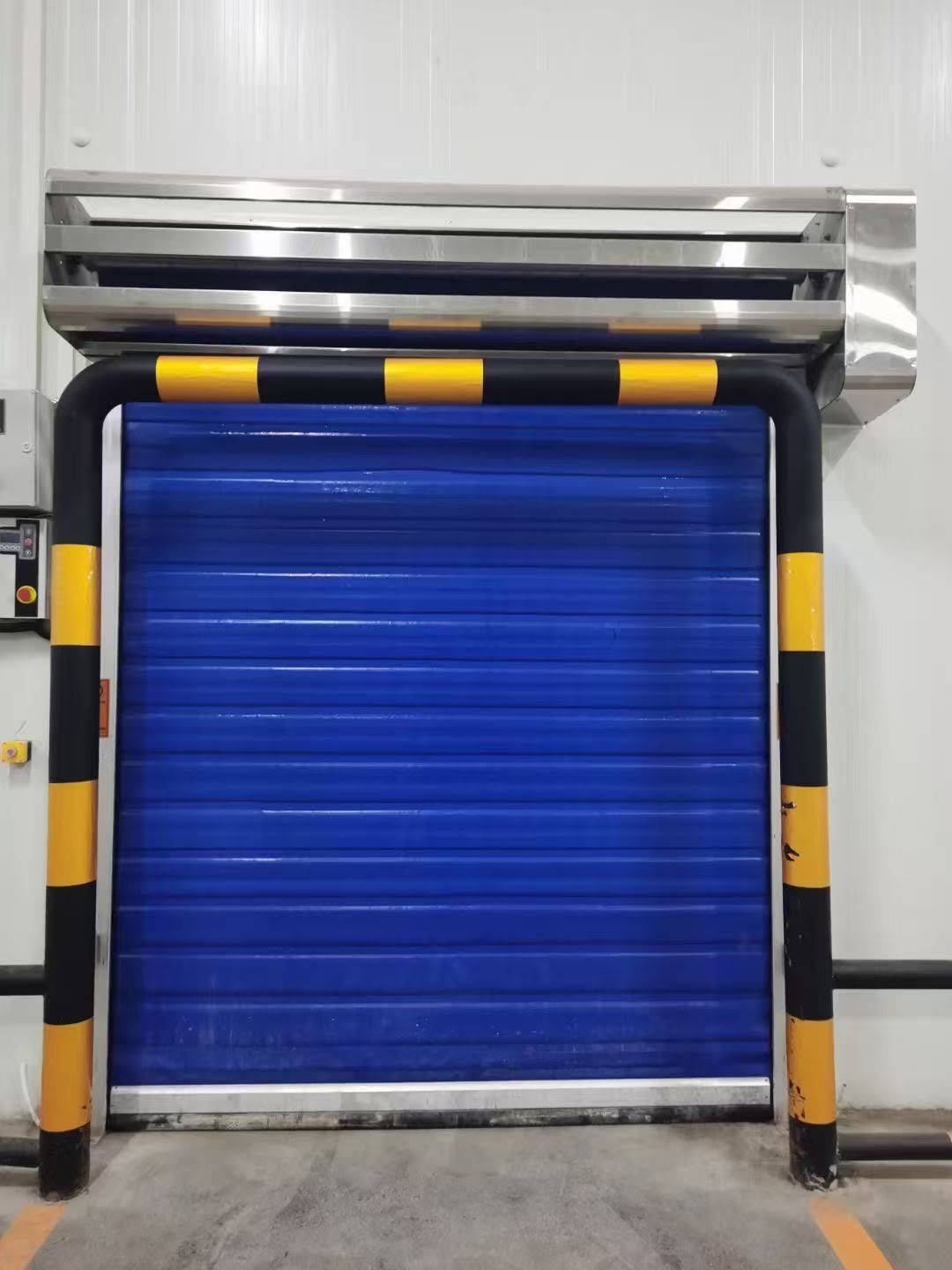
I. Cold Chain Scenario Requirements: Why Cold Storage Must Use PVC Low-Temperature High-Speed Doors
What many people don't realize is that the cold storage door is the largest source of cold air loss in the entire facility. Traditional manual sliding cold storage doors operate at only 0.2-0.5 m/s, meaning a single forklift passage can leave the doorway open for over 10 seconds. During this time, large volumes of hot, humid outdoor air rush into the cold storage: on one hand, it forces the refrigeration compressor to run continuously at overload, driving up electricity costs; on the other hand, the humid air rapidly condenses into frost and ice when it meets cold surfaces, accumulating on door frames and evaporators, further reducing refrigeration efficiency and shortening equipment lifespan.
PVC low-temperature high-speed doors were born specifically to address this industry pain point. Their overall operating logic can be simply summarized as: fast opening and closing to reduce hot-cold air exchange, thick PVC barrier to block heat transfer, constant heating to prevent ice-related failures, omnidirectional sealing to lock in cold air, and smart induction to avoid safety accidents. Primarily applied in smart livelihood engineering projects, they serve fresh-keeping warehouses, freezers, and frozen goods logistics corridors, dedicated to helping cold chain logistics enterprises improve operational efficiency in cold storage zones and reduce energy operating costs.
Applicable Scenario Details
Freezer Warehouses (-18°C to -35°C): Long-term storage for meat, seafood, and frozen food products;
Fresh-Keeping Warehouses (0°C to 5°C): Transit storage for fruits, vegetables, fresh milk, and prepared meals;
Cold Chain Logistics Loading Bays: Buffer transition zones between outdoor ambient temperature and low-temperature storage, with indoor-outdoor temperature differences reaching over 40°C;
Pharmaceutical Low-Temperature Warehouses: Reagent and vaccine storage facilities at 2-8°C, where temperature stability is critically important;
Quick-Freeze Processing Workshops: High-frequency passage corridors between food production lines and freezer storage.
| Comparison Dimension | Traditional Sliding Cold Storage Door | PVC Low-Temperature High-Speed Door |
|---|---|---|
| Opening/Closing Speed | Opening at 0.2-0.5 m/s, single passage opening exceeds 10 seconds | Opening at 0.8-1.5 m/s, closing at ≥0.6 m/s, single passage opening ≤3 seconds |
| Insulation Structure | Single-layer thin insulation panel with severe gap air leakage | 5-6 layer composite PVC insulation curtain, total thickness 14-20mm, sealed insulation sandwich |
| Anti-Freezing Capability | No heating device, easily freezes and jams below -10°C, requires manual ice removal | Built-in track heating anti-freeze mechanism, no ice jams at -35°C, automatic defrosting |
| Energy Performance | Significant cold air loss, 20%-35% higher daily cold storage power consumption | Greatly reduced hot-cold exchange, 15%-28% daily energy savings |
| Passage Efficiency | Manual push-pull operation, long forklift waiting times, limited daily cargo throughput | Radar/geomagnetic automatic induction, no manual operation required, 3x passage efficiency improvement |
| Safety Configuration | Basic collision protection only, no anti-pinch induction, high risk of injury and cargo damage | Infrared beam + bottom safety airbag dual protection, instant rebound upon obstacle detection |
| Long-Term Maintenance Cost | Frequent ice removal, seal strip replacement every 6 months, frequent downtime | Constant-temperature tracks reduce frost buildup, durable sealing components, 60% lower annual maintenance cost |
II. Five Core Systems: Mid-Level Operating Principles of PVC Low-Temperature High-Speed Doors
A complete PVC low-temperature high-speed door does not operate as a single component. Instead, it relies on the coordinated operation of five modules: PVC insulation curtain thermal barrier system, heating anti-freeze system, dual-drum servo drive lifting system, omnidirectional airtight sealing system, and smart safety control system. Each system performs its dedicated function, collectively maintaining a stable low-temperature environment.
2.1 Multi-Layer PVC Insulation Curtain Thermal Barrier System (Core Barrier Blocking Heat Exchange)
PVC Insulation Curtain (Definition: A flexible rolling door material made of polyvinyl chloride as the base material, filled with specialized insulation material internally) is the most critical structure for isolating hot and cold air. It adopts a 5-6 layer "sandwich" composite structure: inner and outer layers are thickened wear-resistant PVC fabric for protection, while the middle sandwich layer is filled with high-density specialized thermal insulation material, with overall thickness consistently maintained at 14mm-20mm.
From a physics perspective, heat transfer occurs in three forms: conduction, convection, and radiation. The multi-layer sandwich structure traps large volumes of stationary air internally. Since air has a far lower thermal conductivity than solid materials, it directly cuts off the cold-heat conduction pathway. The multi-layer stacked structure also prevents direct convective air exchange between inside and outside, keeping air leakage rates extremely low when the door is closed and preventing continuous cold air loss. Both sides of the curtain are fitted with specialized PVC sealing edges that lock tightly into the aluminum alloy tracks when closed, eliminating gap cold air leakage. Meanwhile, the fabric resists low-temperature cracking and remains flexible even under long-term exposure to -35°C environments. Multiple color options are available to match different facility visual standards.
2.2 Heating Anti-Freezing System (Dedicated Design Solving Low-Temperature Ice Jams)
The fatal flaw that prevents ordinary high-speed doors from being used in freezers is the absence of an anti-freeze structure: when hot, humid outdoor air enters the track gaps, it instantly condenses into ice upon meeting low temperatures, jamming the curtain and preventing lifting. PVC low-temperature high-speed doors are equipped with a Heating Anti-Freezing Device (Definition: A constant-temperature heating component pre-embedded inside the tracks and motor housing), which is the core technology enabling operation in sub-zero extreme cold.
The design and application of the heating mechanism prevents track freezing caused by heat exchange during frequent door operation, further ensuring stable door operation and work efficiency in low-temperature environments. The equipment operates stably across a range from +60°C to -35°C, fully covering all temperature zones from fresh-keeping to deep-freeze. This completely eliminates the tedious work of manual ice shoveling and shutdown defrosting, ensuring 24-hour uninterrupted cargo operations.
2.3 Dual-Drum Servo Drive Lifting System (Power Source Enabling High-Speed Operation)
The lifting mechanism adopts a Dual-Drum Lifting Structure, paired with a 1.5kW low-temperature-resistant dedicated stainless steel servo motor (Definition: A specialized drive motor adapted for low-temperature environments with precisely controllable start-stop speed), combined with a multi-turn absolute encoder for electronic limit positioning.
Opening speed is freely adjustable up to 0.8-1.5 m/s, and closing speed is no less than 0.6 m/s. When a forklift approaches, the door instantly rises fully; after the vehicle passes, it immediately descends and closes, compressing doorway exposure time to the minimum and reducing hot-cold air exchange at the source. Electronic limit positioning eliminates the need for manual mechanical adjustment — lift height can be set with one button directly in the stainless steel control box. Meanwhile, the main components of the electronic limit switch use multi-turn absolute encoders to ensure stability and reliability, with minimal positioning error and smooth, jam-free operation.
2.4 Omnidirectional Airtight Sealing System (Locking in Cold Air from All Angles)
Sealing is divided into three parts — top sealing, bottom airbag sealing, and side track sealing — forming a 360-degree dead-angle-free airtight barrier:
Sides: Specialized PVC sealing edges fit tightly against 3.0mm thick aluminum alloy tracks, with gaps almost completely eliminated;
Bottom: Elastic safety airbag seal adapts to minor floor unevenness, fully conforming to the ground when closed and blocking ground-level air leakage pathways;
Top: The housing frame uses 304 stainless steel, paired with sealing rubber strips to seal top gaps.
The structural design and application of top and bottom door seals effectively isolate air pressure convection on both sides of the door, further enhancing airtight performance. Under identical operating conditions, measured airtight performance is over 80% better than traditional cold storage doors. Meanwhile, the curtain guide components, curtain, and tracks in the door operation guide system fit tightly together with strong wear-resistant materials, ensuring overall wind resistance up to National Standard Wind Resistance Grade 6. Even in strong outdoor wind conditions, the door will not shake or lose its seal.
2.5 Smart Safety Control & Induction System (Balancing Automation and Operational Safety)
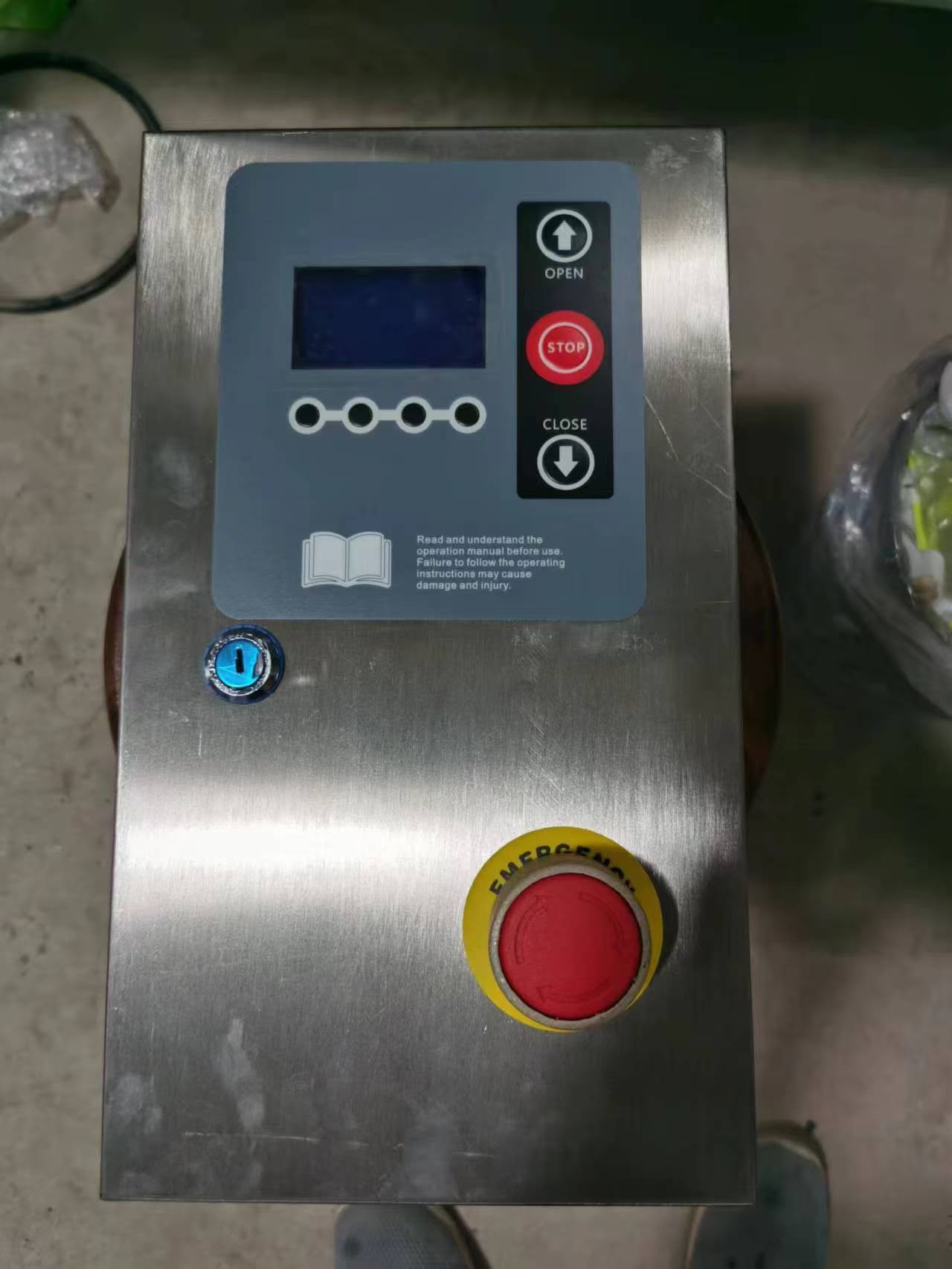
The control system uses a Baojiu low-temperature-resistant dedicated stainless steel control box, with overall protection rating reaching IP54 (Definition: A waterproof and dustproof protection standard that resists splashing water and dust intrusion into equipment internals), complying with all national electrical safety standards. It remains waterproof and dustproof even in harsh environments, resisting short-circuit damage in humid, high-temperature-difference cold storage conditions.
1) Safety Protection Principle (Dual Insurance Design, Both Standard Configuration)
Infrared Safety Protection: Opposing photoelectric eyes are installed on both sides of the door frame. When objects are detected below the high-speed door, the door remains open; when objects pass below during door descent, the door opens to its fully open position and delays descent until no obstacles remain below;
Bottom Safety Airbag Protection: When the door is descending and an object lies within the infrared safety protection blind zone, the door pressing against the obstacle below triggers the airbag, causing the door to rapidly rebound to its fully open position, effectively protecting objects or pedestrians below from accidents.
2) Multiple Smart Opening Control Logic
The base configuration is control cabinet interface button operation. A rich range of optional control methods is available: radar induction (automatic door opening when forklifts approach), geomagnetic loop induction (door opening triggered when vehicles drive over the sensing zone), Bluetooth RF, remote control induction, pull-rope switch, and more. These adapt to different warehouse operation workflows, eliminating the need for personnel to dismount and manually open doors, greatly improving loading and unloading efficiency.
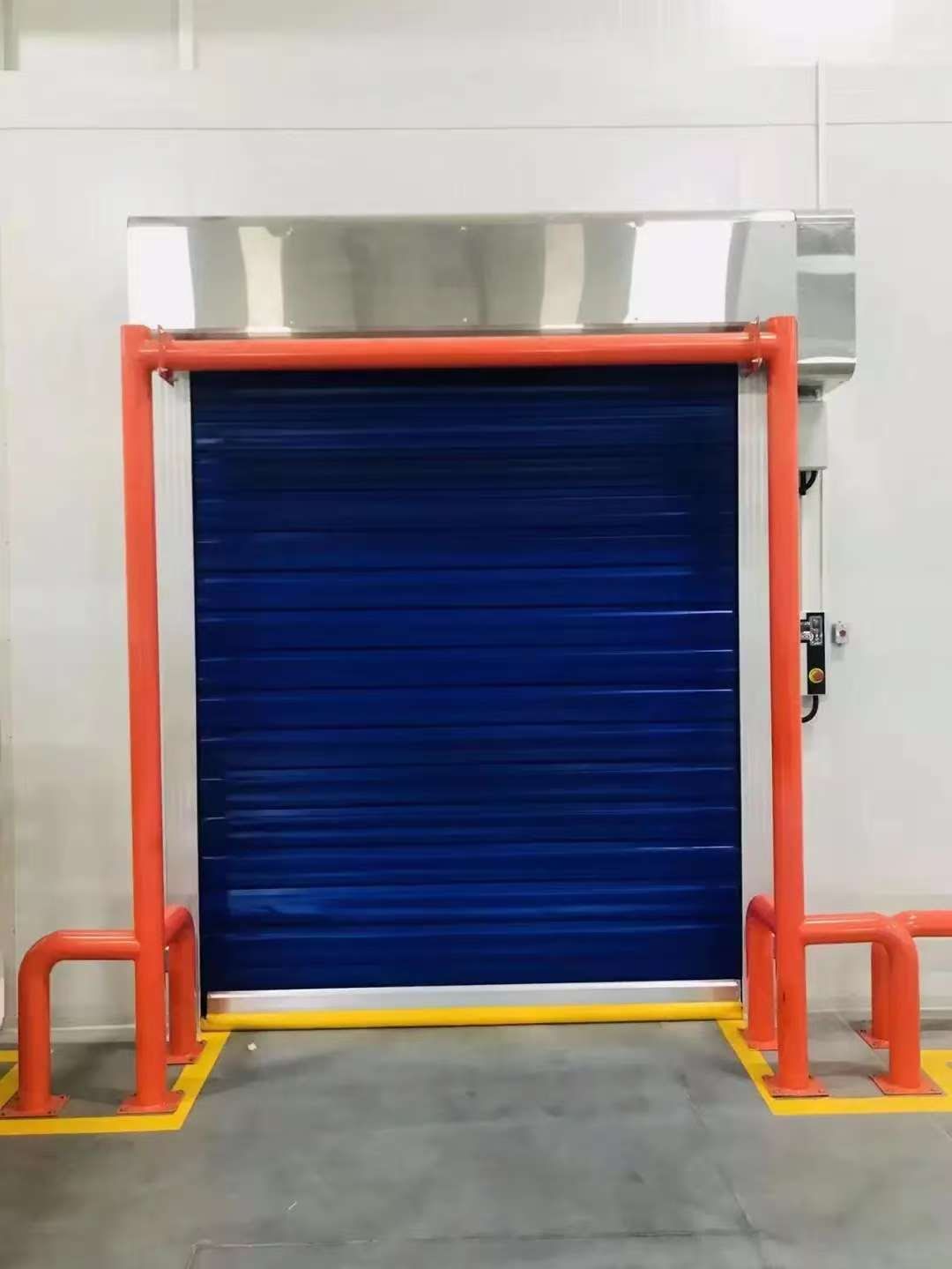
III. Micro Component Craftsmanship: How Each Part Ensures Stable Low-Temperature Operation
The ability of a complete PVC low-temperature high-speed door to operate stably in sub-zero environments over the long term depends on the low-temperature adaptation design of every component. These subtle structures directly determine equipment lifespan and insulation effectiveness:
Tracks and Frame: Both side tracks use 3.0mm thickened aluminum alloy for even heat conduction, facilitating heat transfer from the heating device and resisting deformation; the top housing frame uses 304 stainless steel, resisting moisture corrosion and preventing rust in high-humidity cold storage environments;
Control Box and Motor: Uses Baojiu low-temperature-resistant dedicated stainless steel control box and 1.5kW low-temperature-resistant dedicated stainless steel motor, with internal circuits insulated to prevent hardening and cracking at low temperatures; the servo motor uses anti-freeze lubricating grease, maintaining power output without degradation at -35°C; the multi-turn absolute encoder precisely records door position, preventing positioning drift after frequent lifting cycles;
Curtain Sealing Components: PVC sealing strips are formulated with cold-resistant additives, maintaining elasticity at low temperatures without hardening or losing sealing effectiveness; the bottom airbag is made of low-temperature-resistant flexible rubber, resisting damage from repeated compression;
Heating Circuit Components: Heating cables are treated for low-temperature weather resistance, preventing cracking and electrical leakage under alternating hot-cold conditions, paired with leakage protection devices to ensure electrical safety.
These micro components may seem insignificant, yet they solve a series of failures that plague ordinary industrial doors in cold storage environments — rusting, freezing and cracking, positioning failure, and electrical leakage — enabling the complete equipment to operate stably for millions of cycles and reducing long-term maintenance investment. The company organically integrates servo technology, sensing technology, and communication technology, making cold storage door products intelligent, technological, digital, modular, and humanized. Under the premise of ensuring safe and stable operation, it focuses on providing energy-saving solutions for fresh-keeping warehouses, freezers, and frozen goods logistics corridors.
IV. Measurable Real-World ROI Summary of PVC Low-Temperature High-Speed Doors
Based on the principles explained above, we can clearly calculate the tangible benefits the equipment delivers, rather than vague claims of "good performance and energy savings":
Energy Savings: The dual effect of high-speed operation and multi-layer PVC insulation sealing reduces refrigeration compressor load by 15%-28%, saving thousands of dollars in monthly electricity costs for a medium-sized 5,000㎡ freezer warehouse;
Efficiency Gains: Automatic induction door opening and 3x faster operation speed reduce single forklift passage time by 70%, increasing cargo throughput within the same time frame without additional forklifts or labor;
Maintenance Savings: Built-in track heating eliminates daily manual ice shoveling and defrosting; stainless steel and cold-resistant components have low failure rates, reducing annual repair and parts replacement costs by 60%;
Cargo Quality Benefits: Internal temperature fluctuation is greatly reduced, preventing frozen goods from repeatedly thawing and deteriorating, lowering cargo loss rates and ensuring more stable storage quality for fresh and frozen food products;
Safety Benefits: Infrared + safety airbag dual induction protection eliminates pinching and cargo-crushing accidents, reducing workplace injury and cargo damage compensation costs.
V. Frequently Asked Questions (Industry High-Frequency Real User Queries)
Q1: What is the lowest temperature a PVC low-temperature high-speed door can withstand? Can it be used in a -35°C deep-freeze warehouse?
A: Absolutely. The equipment's stable operating temperature range is -35°C to +60°C. The tracks have built-in heating anti-freeze mechanisms that continuously maintain track contact surface temperatures above the dew point, preventing moisture from condensing into frost. At -35°C deep-freeze warehouses, there are no ice jams year-round, and no manual ice removal or defrosting is required. The multi-layer PVC insulation curtain is formulated with cold-resistant additives, maintaining flexibility without cracking at low temperatures, making it suitable for all deep-freeze cold storage scenarios.
Q2: Is the PVC curtain durable enough? Will it break if a forklift bumps into it?
A: Genuine PVC low-temperature high-speed doors use a 5-6 layer thickened composite structure with total thickness of 14-20mm. The inner and outer layers are wear-resistant PVC fabric, with impact resistance far exceeding ordinary single-layer curtains. Minor forklift scrapes during daily operation will not cause damage. Even in the event of a strong impact, the flexible curtain will not develop sharp deformations like rigid door panels. During maintenance, only the damaged curtain section needs to be replaced, with costs far lower than replacing an entire rigid door.
Q3: Will the heating device running 24/7 consume a lot of electricity?
A: Not significantly. The heating device uses constant-temperature automatic control — it only activates when track temperature drops below the frost formation threshold and automatically powers off once the target temperature is reached. With low heating power, daily heating consumption for a single door is only a few kilowatt-hours. Compared to the extra electricity consumed by the refrigeration compressor due to cold air leakage, the energy savings far outweigh the heating energy cost.
Q4: What automatic opening methods are available for PVC low-temperature high-speed doors, and which is best for cold chain warehouses?
A: The base configuration is control cabinet button operation. Optional methods include radar induction, geomagnetic loop induction, Bluetooth RF, remote control induction, and pull-rope switches. For high-frequency forklift cold chain operations, geomagnetic loop induction is the preferred choice — it only triggers door opening when vehicles drive over the sensing zone, avoiding false triggers from pedestrian movement. For pedestrian passages, radar induction works well, and separating pedestrian and vehicle flows better adapts to warehouse operation workflows.
Q5: How is the wind resistance of this door? Can it be used for outdoor cold storage loading bays?
A: National Standard Grade 6 wind resistance corresponds to outdoor wind speeds of 10.8-13.8 m/s, classified as strong wind level. The curtain guide components, curtain, and tracks in the door operation guide system fit tightly together with strong wear-resistant materials. As long as both sides of the doorway are properly sealed and tracks are firmly fixed, the door is fully suitable for outdoor cold storage loading bays. In strong wind conditions, the curtain will not bulge or develop gap air leakage, and it can operate stably even in windy coastal regions.
Recommended Products
latestAutomatic Door Accessories
- Safety Edge Sensor for Rapid Roll Door Anti-Crushing Protection
- High-Speed Door 0.75KW Servo Motor Control Box Set – Reliable & Efficient Drive Solution
- 1.5KW Servo Motor & Control Box Combination - High-Efficiency Drive System for Industrial Doors
- Industrial Door Zippers & High Speed Door Zippers - Durable Industrial Door Accessories
- 0.75KW High-Speed Door Servo Drive System - Reliable & Energy-Saving Industrial Solution
- Manufacturers Foot Pedal Activator & Safety Beam Photocell Barrier Sensor for Medical Sliding Doors
- Industrial Door Zippers & High Speed Door Zippers - Durable Industrial Door Accessories
- AOK-AC123 Electric Curtain Remote Control - Wireless Design with Wear-Resistant Acrylic Crystal Pane
- Permanent Magnet AC Synchronous Servo Motor with Worm Reduction Mechanism for High Speed Door
- Precision Synchronous Servo Motor for High-Speed Door – Worm Gear Reduction
- New Surface-Mounted Waterproof Infrared Sensor Switch
- Durable PVC Fast Rolling Door Fittings for Enhanced Security
- Automatic Repair of Zipper Door Plastic/Polymer Rails
- Smart Automatic Door Sensor for Fast Rolling Access Control
- Soft Fast Gate Control System 1.5kw Servo Motor and Control Box
- Automatic Access Control Square Surface Mount Infrared Non-Contact Switch
- Explosion-Proof Reinforced Self-Limiting Electric Heating Belt
- Explosion-Proof Shielded Self-Controlling Temperature Electric Heating Belt
- Heating Belt for Anti-Freezing, Heating and Heat Preservation of Cold Storage Doors
- 40W flame retardant explosion-proof self-limiting electric heating belt